The Big Idea: Power Is Safer When It’s Shared
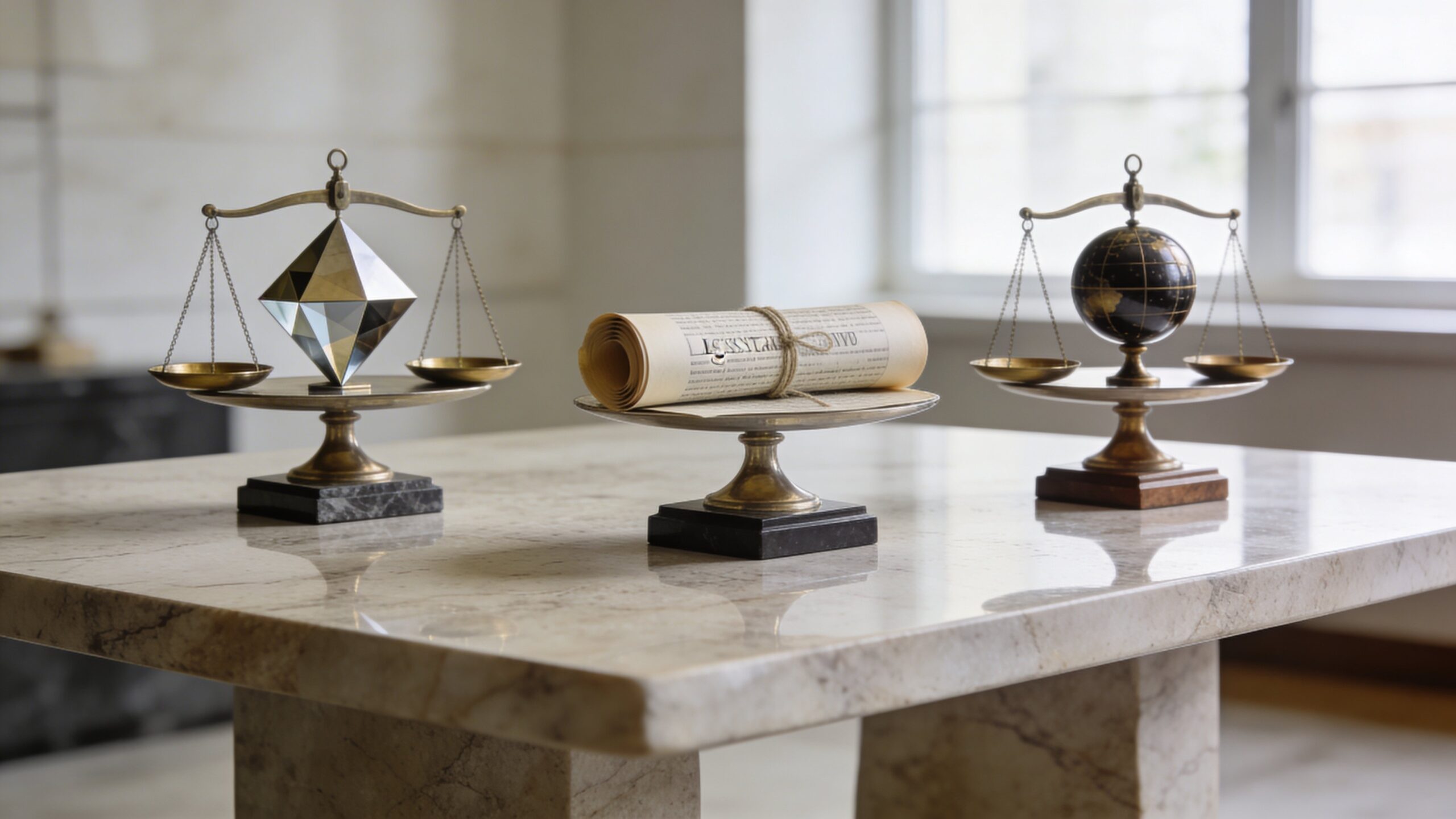
Checks and balances is a simple safety design for government: instead of trusting one person or one group to always do the right thing, the system spreads power out and builds in “speed bumps.” Those speed bumps slow down bad ideas, force cooperation, and give the public more than one doorway to influence decisions. Think of it like a three-part machine where each part has its own job, and each part can stop the others from running wild. It’s not about constant fighting; it’s about preventing a single runaway engine from dragging everyone else with it. When it works well, it turns big choices into a process instead of a snap decision.
A: It’s built to slow big decisions so they face debate, compromise, and scrutiny before becoming permanent.
A: The design makes it difficult, but it depends on whether other branches—and the public—use their checks.
A: Sometimes it’s protective friction; other times it becomes harmful when it blocks basic governing tasks.
A: Money and lawmaking—budgets and statutes can steer or limit what the executive can do.
A: Judicial review—declaring a law or action unconstitutional forces change and sets boundaries.
A: Yes. Agencies translate laws into rules; Congress, the President, and courts all compete to shape that process.
A: Leaders and judges can shape policy for years, so confirmation is a major balancing checkpoint.
A: Executive actions can direct enforcement and operations, but they can be limited by courts and by Congress’s laws and funding.
A: Elections are a recurring check—voters can reward restraint, punish overreach, and shift control of branches.
A: Ask: “Who can stop this, and what tool would they use—votes, funding, courts, or oversight?”
Meet the Three “Teams” (Without the Textbook Voice)
In the U.S. model, the power is mainly split into three branches. Congress (the legislative branch) writes the rules—laws are basically the country’s “official instructions.” The President and the executive branch run the day-to-day operations and carry out those instructions, like a manager executing a plan. Courts (the judicial branch) interpret the rules and decide whether government actions match the Constitution. Each branch is supposed to be strong enough to do its job, but not strong enough to do everyone else’s job too. That tension is not a bug—it’s the point. The goal is to make power deliberate, visible, and harder to abuse.
Why This System Exists: A Built-In “Don’t Get Too Comfortable” Rule
Checks and balances grew out of a fear that power, when concentrated, tends to expand. History is full of examples where leaders started with a promise and ended with a grip. The framers wanted a structure that made it difficult for any one person, party, or branch to permanently dominate.
So they designed a system that forces negotiation and discourages shortcuts. It can feel messy and slow, but that slowness is often protective. A government that can do anything instantly can also do the wrong thing instantly.
The “Check” Part: How One Branch Can Stop Another
A “check” is basically a built-in way to block, limit, or challenge another branch. Congress can pass laws, but the President can veto them. The President can appoint powerful officials and judges, but the Senate can say yes or no. Courts can review actions by Congress or the President and say, “That breaks the Constitution.”
None of these checks is meant to be used every day like a weapon. They’re more like emergency brakes and guardrails. The idea is that if one branch is tempted to overreach, another branch has a reason—and a tool—to push back.
The “Balance” Part: Why No One Gets the Whole Steering Wheel
Balance isn’t about perfect equality; it’s about preventing total control. The branches overlap in specific ways so they can influence one another. That overlap creates a constant trade: you can’t get the outcome you want unless you convince someone else to sign off, cooperate, or at least not stop you.
Balance also changes depending on the moment. In crises, the executive branch can feel more powerful because it can act quickly. Over time, Congress can regain leverage through budgeting, oversight, and lawmaking. Courts can reshape what’s allowed by deciding key cases. The balance shifts, but the goal stays the same: no permanent monopoly on power.
Congress’s Checks: The Power of the Pen and the Wallet
Congress has one of the strongest tools in any organization: the ability to write the rules and control the money. Laws set the boundaries for what agencies can do. Budgets determine what gets funded, expanded, reduced, or ended. Even if the President wants to launch a big initiative, Congress can shape it through funding choices and legal limits.
Congress also has oversight power, which is basically the authority to ask, “What are you doing, and why?” Hearings, investigations, and subpoenas aren’t just political theater at their best—they’re ways to force transparency. And in extreme cases, Congress has impeachment power, a constitutional “last resort” to remove certain officials for serious misconduct.
The President’s Checks: Speed, Vetoes, and the Ability to Lead
The executive branch is built for action. While Congress debates and writes, the President can respond quickly, manage agencies, negotiate foreign agreements, and direct the enforcement of laws. The veto is a direct check: it can stop a bill unless Congress gathers enough votes to override. The President also shapes government through appointments. Cabinet leaders, ambassadors, agency heads, and federal judges can steer policy for years. That’s why confirmations matter: the people chosen to run the machine influence how it operates, what it prioritizes, and how aggressively it uses its authority.
The Courts’ Checks: Calling Fouls When Rules Are Broken
Courts are not designed to be fast. They’re designed to be careful. Their major checking power is judicial review—the ability to evaluate whether a law or government action violates the Constitution. In plain terms, courts can say, “You can’t do that,” and require the government to change course.
This matters because even popular actions can be unconstitutional, and even well-intended policies can cross a line. Courts also protect individual rights by enforcing boundaries the other branches might ignore when pressure is high. That doesn’t mean courts are above controversy; it means their job is to be a stabilizing force when politics gets heated.
A Day-in-the-Life Example: How a Law Becomes a Reality
Imagine Congress passes a new national policy—say, a rule about consumer privacy. That’s Congress writing the “instruction manual.” The President signs it, and executive agencies create the real-world rules and enforcement plans—how the policy works in practice. Then someone challenges it in court, arguing the law or the enforcement steps go too far. The court decides whether it fits the Constitution.
In that one storyline, you can see the design: Congress sets direction, the executive executes, and courts referee the boundaries. If any part overreaches, another part can slow it down, reshape it, or stop it.
Where People Get Confused: “Separation of Powers” vs. “Checks and Balances”
Separation of powers is the basic split—three branches with different jobs. Checks and balances is what happens when those branches are allowed to overlap just enough to restrain one another. Separation is the blueprint; checks and balances are the safety features installed after the blueprint is drawn.
If separation of powers is three locked rooms, checks and balances are the windows and intercoms that let each room see what the others are doing. The system isn’t isolated silos—it’s controlled interaction.
Does It Ever Break? What “Gridlock” Really Means
Sometimes checks and balances feels like a traffic jam. Bills stall, confirmations drag, budgets become dramas, and everyone blames everyone else. That can be frustrating, especially when problems feel urgent. But some of that friction is the system doing its job: making sure big changes are debated rather than rushed. That said, gridlock can become harmful when it prevents basic governance—like passing budgets or responding to widely recognized crises. The system is meant to slow power, not freeze it. When the public sees constant standoffs, it’s often a sign that incentives (political, media, or party dynamics) are overpowering the original purpose of cooperation.
The Hidden Power Behind the Scenes: Bureaucracy, Agencies, and Rules
A lot of real government happens through agencies—departments and regulators that translate laws into detailed rules. Checks and balances apply here too. Congress can rewrite the law, cut funding, or hold oversight hearings. The President can direct priorities and leadership. Courts can strike down rules that exceed authority or violate rights.
This is why “checks and balances” isn’t just about dramatic moments like vetoes and Supreme Court decisions. It’s also about the quieter daily tug-of-war over how laws are interpreted and applied.
Why It Still Matters to Regular People
Checks and balances protects you from whiplash. Without it, policies could change overnight with one leader’s mood or one election. The system forces durability: laws and major shifts usually require broader agreement, which makes them harder to reverse instantly.
It also protects minority rights and unpopular speech, especially when fear or anger runs hot. When one branch is tempted to “just do it,” another branch can demand process, evidence, and constitutional limits. Even when it’s messy, it’s a structure built to keep the country from being run like a single-person group chat.
A Quick Reality Check: The System Depends on People, Not Just Paper
A constitution can set the rules, but people decide whether to respect them. Checks and balances works best when leaders accept limits, tell the truth about what they’re doing, and treat power as borrowed rather than owned. When leaders act like limits are optional, the system strains.
Public attention matters too. Voters, journalists, watchdog groups, and civic institutions all shape incentives. Checks and balances isn’t only inside government—it’s also the outside pressure that makes government care about consequences.
The Takeaway: A Government With Brakes Is a Feature, Not a Flaw
Checks and balances is the idea that power should move through more than one set of hands before it becomes permanent. It slows action enough to reduce mistakes, forces negotiation, and creates multiple ways to challenge overreach. It can be annoying, but it’s intentionally annoying in the same way a seatbelt is intentionally inconvenient. If you ever wonder why government looks like a constant debate, this is the reason: the system is designed to make big decisions earn their way through scrutiny. Not because progress is bad, but because unchecked power is worse.