


What Are Constitutional Principles? A Plain-English Guide
Constitutional principles are the hidden framework behind freedom, law, and government power. This plain-English guide breaks down how constitutions limit authority, protect rights, and keep power in check—without legal jargon.

The Core Principles of the U.S. Constitution Explained Simply
The U.S. Constitution isn’t just a historic document—it’s a living blueprint for freedom. Discover the core principles that shape American government, from popular sovereignty and individual rights to checks, balances, and limited power, all explained in clear, plain English for modern readers.

Why the Constitution Still Matters in Modern America
Written over 200 years ago, the U.S. Constitution still shapes power, protects freedom, and guides a rapidly changing nation. Discover why this remarkable document remains essential to modern American life—and why its principles matter now more than ever.

Limited Government: The Principle That Changed History
Limited government transformed the world by placing boundaries on power and freedom at the center of society. From absolute rulers to accountable institutions, this principle reshaped law, liberty, and prosperity—proving that true stability and progress arise when authority is restrained and individuals are empowered.

Separation of Powers: Why the Founders Feared Concentrated Power
Why did America’s Founders fear concentrated power so deeply? This compelling exploration reveals how history, human nature, and hard-earned lessons shaped the separation of powers—and why that constitutional design still stands as one of the strongest defenses of liberty today.

Checks and Balances Explained Without Legal Jargon
Checks and balances is democracy’s safety system: three branches, shared power, and built-in brakes that stop overreach. In plain English, this guide shows how vetoes, confirmations, courts, budgets, and oversight work together—and why a little friction can protect everyone.

Individual Liberty: The Heart of Constitutional Government
What keeps freedom from becoming a temporary permission slip? Constitutional government: rights with teeth, power with limits, and law that must prove its case. Explore why liberty depends on due process, free speech, divided authority, and civic courage—and how those guardrails still matter in a world of emergencies, polarization, and data.

Federalism Explained: How Power Is Divided in America
Federalism is America’s built-in power split—one nation, two levels of government, and constant negotiation. Learn how the Constitution divides authority, why conflicts happen, and how federal vs. state decisions shape everything from schools to taxes to rights. It’s not just politics—it’s the system running your daily life.
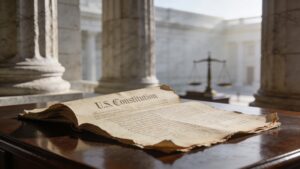
The Rule of Law: Why No One Is Above the Constitution
What keeps power from becoming personal? The rule of law—America’s promise that the Constitution binds everyone, from citizens to presidents. Explore how checks and balances, due process, and equal justice protect freedom, even when emotions run high and shortcuts look tempting.

Popular Sovereignty: Where Government Power Truly Comes From
Where does government power really come from—laws, leaders, or the public? Popular sovereignty argues it starts with the people and survives only through consent, accountability, and rights. Explore how legitimacy is built, how it erodes, and what it takes to keep citizens as the true source of authority in modern democracy.

Natural Rights and the Constitution: Life, Liberty, and Property
What if the Constitution isn’t mainly a power plan—but a restraint system? Explore how natural rights—life, liberty, and property—shape American government, due process, and the limits of authority, and why those limits still matter when “reasonable exceptions” start piling up.

Constitutional Principles vs. Modern Government Reality
A powerful look at how constitutional ideals collide with the realities of modern government, reshaping liberty, power, and public trust.