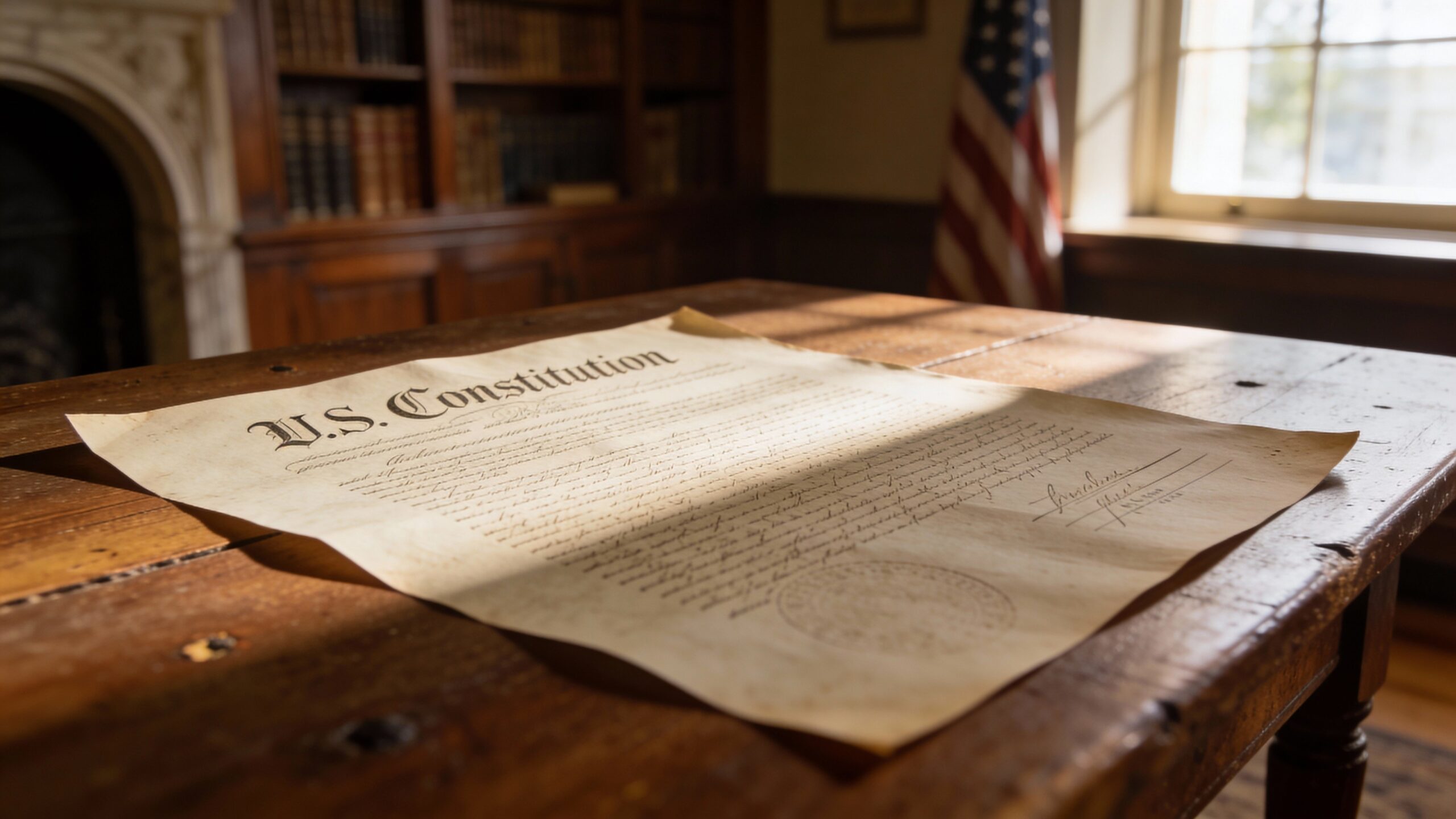
The United States Constitution is often described as the backbone of American democracy, yet many people find it intimidating or overly complex. Written in the late 18th century, its language can feel distant from modern life. Still, the Constitution rests on a set of core principles that are surprisingly practical, intuitive, and deeply relevant today. These principles explain how power is structured, why individual rights matter, and how a free society protects itself from tyranny—both sudden and gradual. At its heart, the Constitution is not just a legal document. It is a philosophy of government, shaped by experience, skepticism of concentrated power, and confidence in the ability of ordinary citizens to govern themselves. By understanding its core principles in plain English, the Constitution becomes far less abstract and far more alive.
A: Yes, its principles guide modern law and governance.
A: Yes, through the amendment process.
A: Mostly, it limits government power.
A: To prevent abuse and concentration of authority.
A: The Bill of Rights and later amendments.
A: The judicial branch.
A: Federalism preserves local self-governance.
A: Yes, the system is built to manage conflict peacefully.
A: Yes, courts can strike them down.
A: To be an informed, empowered citizen.
Why the Constitution Exists at All
Before exploring its principles, it helps to understand why the Constitution was created in the first place. After winning independence from Britain, the original American government operated under the Articles of Confederation. That system intentionally kept the national government weak, reflecting fear of centralized authority. Unfortunately, it proved too weak to govern effectively, enforce laws, or stabilize the economy.
The Constitution was written to fix those problems without recreating the kind of tyranny Americans had just escaped. The goal was balance: enough government power to function, but not enough to dominate. This tension between authority and liberty shaped every principle embedded in the document.
Popular Sovereignty: Power Comes From the People
One of the most fundamental ideas in the Constitution is popular sovereignty. Simply put, the people are the ultimate source of government power. The government does not rule because of divine right, inheritance, or force—it rules because citizens allow it to.
This idea is announced clearly in the opening words: “We the People.” That phrase signals that authority flows upward from citizens, not downward from rulers. Elections, jury service, civic participation, and even constitutional amendments all exist because the people retain ultimate control.
Popular sovereignty also explains why government officials are temporary and replaceable. Presidents, lawmakers, and judges serve roles defined by law, not personal entitlement. When they lose the trust of the people or violate constitutional boundaries, they can be removed or overridden through lawful means.
Limited Government: Power With Boundaries
The Constitution is built on the assumption that power, left unchecked, will eventually be abused. For that reason, it establishes a system of limited government. This means the government can only do what the Constitution explicitly allows it to do.
Unlike governments with “general powers,” the U.S. federal government must point to constitutional authority for its actions. If a power is not granted, it is withheld. This principle is reinforced by the Tenth Amendment, which reserves undelegated powers to the states or the people themselves. Limited government protects liberty by making freedom the default condition. Instead of citizens needing permission to act, the government must justify restrictions. This idea remains central to debates over regulation, surveillance, taxation, and executive authority.
Rule of Law: No One Is Above the Law
Another cornerstone of the Constitution is the rule of law. This principle holds that everyone—citizens and leaders alike—is subject to the same laws. No individual, office, or institution stands above the legal system.
The rule of law ensures predictability and fairness. Laws must be written, publicly known, and consistently enforced. Government officials cannot simply act on personal whims or political convenience. Their authority comes from law, and they are accountable to it.
This principle also safeguards against tyranny by preventing arbitrary punishment. People are entitled to due process, fair trials, and legal protections regardless of status or popularity. Without the rule of law, constitutional rights would be little more than promises.
Separation of Powers: Dividing Authority to Protect Freedom
One of the Constitution’s most brilliant design features is the separation of powers. Instead of placing all authority in a single branch, the Constitution divides power among three: legislative, executive, and judicial.
Congress writes the laws, the president enforces them, and the courts interpret them. Each branch has distinct responsibilities and institutional interests. This separation prevents any one branch from becoming dominant. The logic behind this system is simple: ambition checks ambition. When power is divided, each branch watches the others closely. Overreach is more difficult because cooperation is required to make major changes. This built-in friction slows decision-making, but it also protects liberty by preventing sudden concentrations of power.
Checks and Balances: Keeping Each Branch in Line
Separation of powers alone is not enough, so the Constitution adds checks and balances. Each branch has tools to limit the others if they exceed their authority.
The president can veto legislation, but Congress can override that veto. Congress controls funding and can impeach executive officials, but the president appoints judges and commands the military. Courts can strike down laws as unconstitutional, but judges are appointed by the executive and confirmed by the legislature.
This interlocking system ensures that power remains contested and accountable. It encourages negotiation, compromise, and restraint—qualities essential in a pluralistic society with diverse interests and beliefs.
Federalism: Sharing Power Between National and State Governments
Federalism is another core constitutional principle that often causes confusion. In simple terms, it is the sharing of power between the national government and the states.
The Constitution grants certain powers to the federal government, such as regulating interstate commerce, conducting foreign policy, and maintaining national defense. All other powers are reserved to the states or the people.
Federalism allows for diversity within unity. States can tailor laws to local values and conditions while remaining part of a single nation. This system encourages experimentation, competition, and responsiveness, while also preventing excessive centralization.
Republicanism: Representation Instead of Direct Rule
The United States is not a pure democracy; it is a constitutional republic. This distinction reflects the principle of republicanism, in which citizens govern through elected representatives rather than direct, continuous voting on every issue.
The framers believed representation would refine public opinion and protect against mob rule. Representatives are expected to deliberate, compromise, and make informed decisions while remaining accountable to voters.
Republicanism balances popular participation with stability. It allows citizens to influence government without requiring constant involvement, making large-scale self-government possible.
Individual Rights: Protecting Freedom From the Majority
While the original Constitution focused heavily on structure and power, it also laid the groundwork for protecting individual rights. This commitment was made explicit with the adoption of the Bill of Rights.
These amendments protect freedoms such as speech, religion, press, assembly, and due process. They exist to shield individuals not only from government abuse, but also from the tyranny of the majority. Even widely supported policies must respect constitutional limits. The idea behind these protections is that some rights are so fundamental they cannot be voted away. Liberty depends not only on who governs, but on what government is forbidden from doing.
Due Process: Fairness as a Constitutional Requirement
Due process is a principle that ensures government must act fairly, transparently, and lawfully when dealing with individuals. It applies to criminal trials, civil disputes, and administrative actions.
Procedural due process requires notice, hearings, and impartial decision-makers. Substantive due process limits the types of laws government can pass, especially when they interfere with fundamental rights.
Together, these protections prevent arbitrary punishment and ensure that justice is not merely efficient, but legitimate. Due process reflects the belief that how the government acts matters just as much as what it does.
The Amendment Process: A Living Framework
The Constitution is not meant to be static. Its authors recognized that future generations would face challenges they could not foresee. For that reason, they included a formal amendment process.
Amending the Constitution is intentionally difficult, requiring broad national consensus. This ensures stability while still allowing change. Over time, amendments have abolished slavery, expanded voting rights, limited presidential terms, and reshaped the relationship between citizens and government. This balance between permanence and adaptability has allowed the Constitution to endure while remaining relevant.
Judicial Review: Interpreting the Constitution
Although not explicitly stated in the Constitution, judicial review has become a central principle of American governance. It allows courts to determine whether laws or government actions violate the Constitution.
This authority was established early in the nation’s history and ensures that the Constitution remains the supreme law of the land. Without judicial review, constitutional limits would depend entirely on the self-restraint of lawmakers and executives.
Courts serve as guardians of constitutional boundaries, though their interpretations often spark debate. That debate is itself a sign of a living constitutional system.
The Constitution as a System, Not a Set of Rules
One of the most important things to understand about the Constitution is that its principles work together. Popular sovereignty requires elections, but elections require rights. Rights require courts, but courts require limits. Federalism supports liberty, but liberty also depends on national unity.
The Constitution is not a list of isolated ideas; it is an interconnected system designed to channel human ambition toward constructive ends. Its complexity reflects an understanding of human nature—capable of reason, but vulnerable to temptation.
The Enduring Vision Behind the Constitution
The Constitution was shaped by thinkers such as James Madison, influenced by Enlightenment philosophy, historical experience, and practical necessity. It was ratified in United States with the understanding that no system is perfect, but some are better at correcting their own flaws.
What makes the Constitution remarkable is not that it eliminates conflict, but that it provides peaceful ways to manage it. Disagreement is expected. Change is possible. Abuse is anticipated—and restrained.
Why These Principles Still Matter Today
Modern political debates often revolve around policy details, but beneath those arguments lie constitutional principles. Questions about executive authority, states’ rights, free speech, privacy, and judicial power all trace back to the core ideas embedded in the Constitution.
Understanding these principles equips citizens to evaluate government actions more clearly. It turns abstract disputes into concrete questions: Who has the authority to decide? Where are the limits? How are rights protected? In that sense, constitutional literacy is a form of civic empowerment.
A Simple Truth at the Heart of the Constitution
Despite its length and complexity, the Constitution rests on a simple truth: freedom requires structure. Liberty cannot survive chaos, and power cannot be trusted without limits. The Constitution attempts to hold these truths together in permanent tension. By dividing power, limiting authority, protecting rights, and trusting the people, the Constitution creates a framework where self-government is possible—not perfect, but resilient. That resilience is why, more than two centuries later, the core principles of the U.S. Constitution still matter, still guide, and still invite every generation to participate in the ongoing experiment of liberty.