A Revolution Born From Suspicion
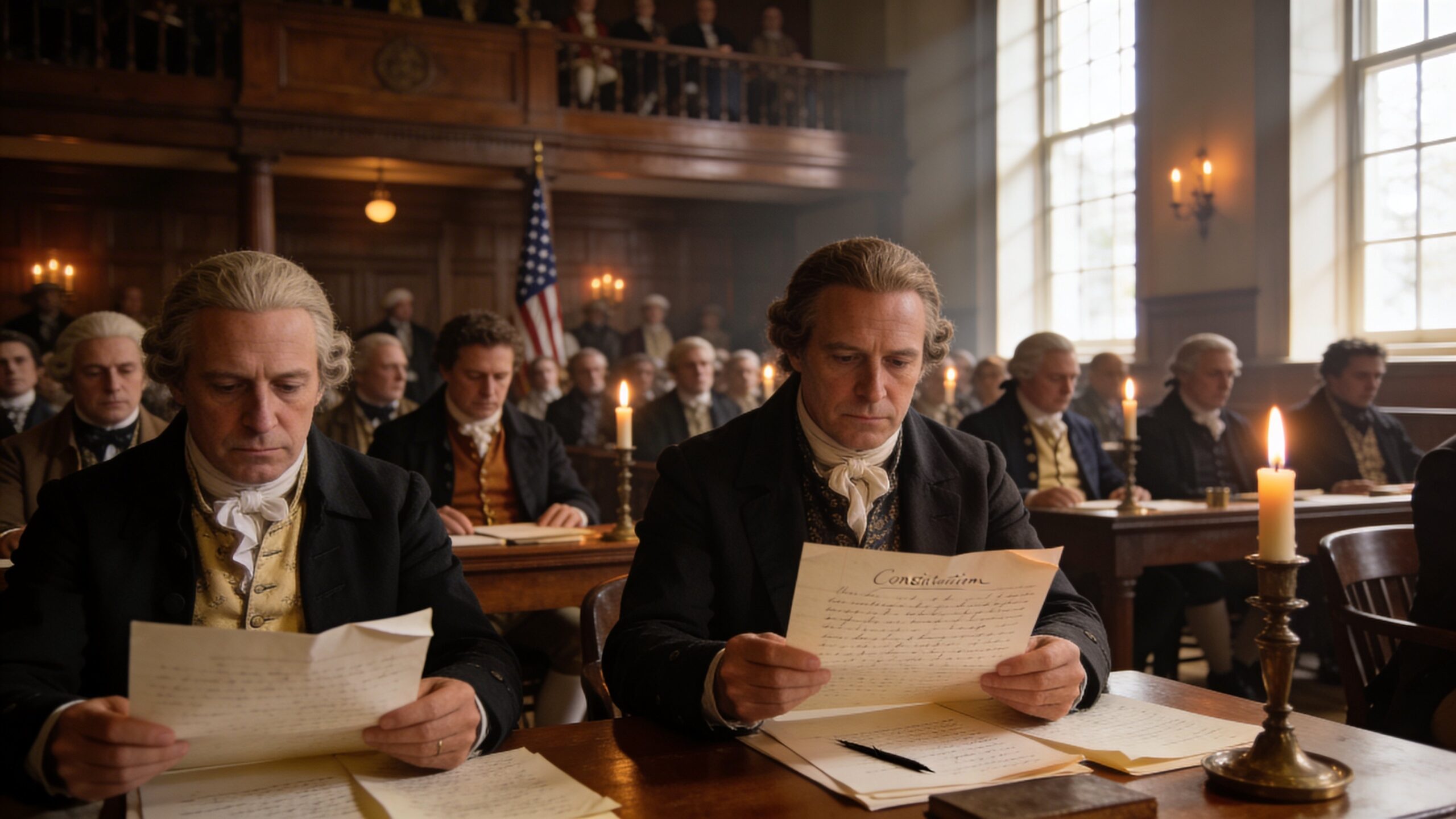
The American Founders did not begin with a romantic view of government. They did not see centralized authority as naturally wise, fair, or self-limiting. They saw it as a force that could easily expand, harden, and turn against the people it claimed to serve. Their distrust of government power was not abstract political theory floating above daily life. It was a lesson drawn from direct experience. Before the United States existed, the colonies lived under imperial supervision, parliamentary taxation, trade restrictions, military presence, and the steady reminder that decisions affecting their lives could be made far away by people they did not elect and could not remove. That history shaped the entire founding generation. The Revolution was not only a war for independence. It was also a rebellion against concentrated political power. The Founders believed that power, once gathered into too few hands, tends to defend itself, enlarge itself, and justify itself. That conviction became one of the deepest currents in American political thought. To understand why the Founders distrusted government power, it helps to see that they were not anti-order or anti-law. They believed government was necessary. What they feared was government without restraints, accountability, and limits.
A: No. They believed government was necessary, but only when limited, accountable, and constitutionally restrained.
A: Their experience under British rule convinced them that distant authority often grows unresponsive and coercive.
A: Tyranny, especially power concentrated in too few hands without meaningful checks.
A: They trusted popular consent, but feared unchecked majorities could also violate rights.
A: To keep lawmaking, enforcement, and judgment from being controlled by a single political center.
A: To place certain liberties beyond ordinary government interference and political convenience.
A: History taught them that republics often collapse when power accumulates and restraints weaken.
A: Splitting authority between national and state governments reduced the risk of total consolidation.
A: Not enough to rely on that alone, which is why they built structural limits into the system.
A: Because the Founders’ central concern remains alive whenever government gains new tools, new reach, or fewer restraints.
The British Example Taught a Hard Lesson
The British Empire provided the Founders with a working example of how government power could grow beyond consent. Colonial grievances were not merely about a few taxes or isolated disputes. Many Americans came to believe that the Crown and Parliament had developed a habit of ruling without proper regard for colonial rights. Taxes such as the Stamp Act and Townshend duties were resented not only because they cost money, but because they symbolized a larger principle: power was being exercised over the colonies without meaningful representation. This experience taught the Founders that liberty can disappear gradually under legal forms. A government does not need to look openly tyrannical in order to become oppressive. It can claim necessity, order, tradition, or national interest while slowly reducing local control and individual freedom. The presence of British troops, the use of admiralty courts, and the punishment of colonial resistance deepened the belief that distant power tends to become unresponsive and coercive. By the time independence was declared, many American leaders had concluded that unchecked authority was not an occasional danger. It was a recurring political pattern.
Human Nature Was Central to Their Thinking
One of the clearest reasons the Founders distrusted government power was their view of human nature. They did not assume that rulers become virtuous simply because they hold office. They believed people are driven by ambition, self-interest, fear, pride, faction, and the desire to preserve status. Because government is made of human beings, it carries all the weaknesses of human nature with it. The Founders therefore rejected the idea that liberty could safely rest on trust alone.
This was one of the most important insights of the American founding. They did not try to design a system that depended on unusually noble leaders. They tried to design one that could survive ordinary leaders with ordinary flaws. In their view, the danger was not only that evil men might enter office. The danger was that even capable or respectable leaders might gradually push beyond proper limits once the machinery of power was available to them. Distrust of government power was, in this sense, a realistic judgment about the temptations built into political authority.
The Founders Feared Tyranny More Than Disorder
Modern readers sometimes assume that political stability was the Founders’ highest goal. Stability mattered, but not at any cost. Their writings show repeated concern that a strong government could become a threat greater than the instability it was meant to solve. They feared mob rule, factional conflict, and public disorder, yet they also feared standing armies, executive overreach, legislative domination, and centralized bureaucratic control. To them, tyranny was not always dramatic or theatrical. It could arise through accumulation, precedent, and convenience.
That is why the Founders spent so much time thinking about power itself. Who would hold it? How long would they hold it? Who could stop them? What legal barriers would exist? What rights would remain beyond government reach? These questions reveal a political worldview shaped by caution. The Founders did not think freedom would survive simply because people loved it. They believed freedom survives only when institutions are built to slow power down, divide it, and make it answer to the governed.
History Warned Them About the Fate of Republics
The Founders were deeply read in history. They looked to Greece, Rome, and later European struggles for examples of how republics rise, decay, and collapse. They believed history showed a repeating truth: republics are fragile because power naturally seeks concentration. Leaders may begin by defending the public good, but over time factions harden, ambition grows, corruption spreads, and emergency powers become permanent habits. The fall of earlier republics was not just a classroom topic for them. It was a warning. This historical awareness gave the Founders a tragic sense of politics. They did not assume the American experiment would automatically succeed because its ideals were noble. They knew republics could fail from external threats, but they also knew they could fail from internal weakness, complacency, or overconfidence in leaders. Distrust of government power came partly from that historical memory. The Founders believed that liberty often disappears not in a single dramatic blow, but by small transfers of authority that citizens learn to accept.
They Wanted Government, But Limited Government
It is important to avoid a simple misunderstanding. The Founders did not reject government altogether. They were not advocating chaos, permanent suspicion, or the absence of public institutions. They believed a society needs law, defense, courts, and a framework for public order. What they opposed was arbitrary power. In their minds, the real challenge was to create a government strong enough to function but constrained enough to remain safe.
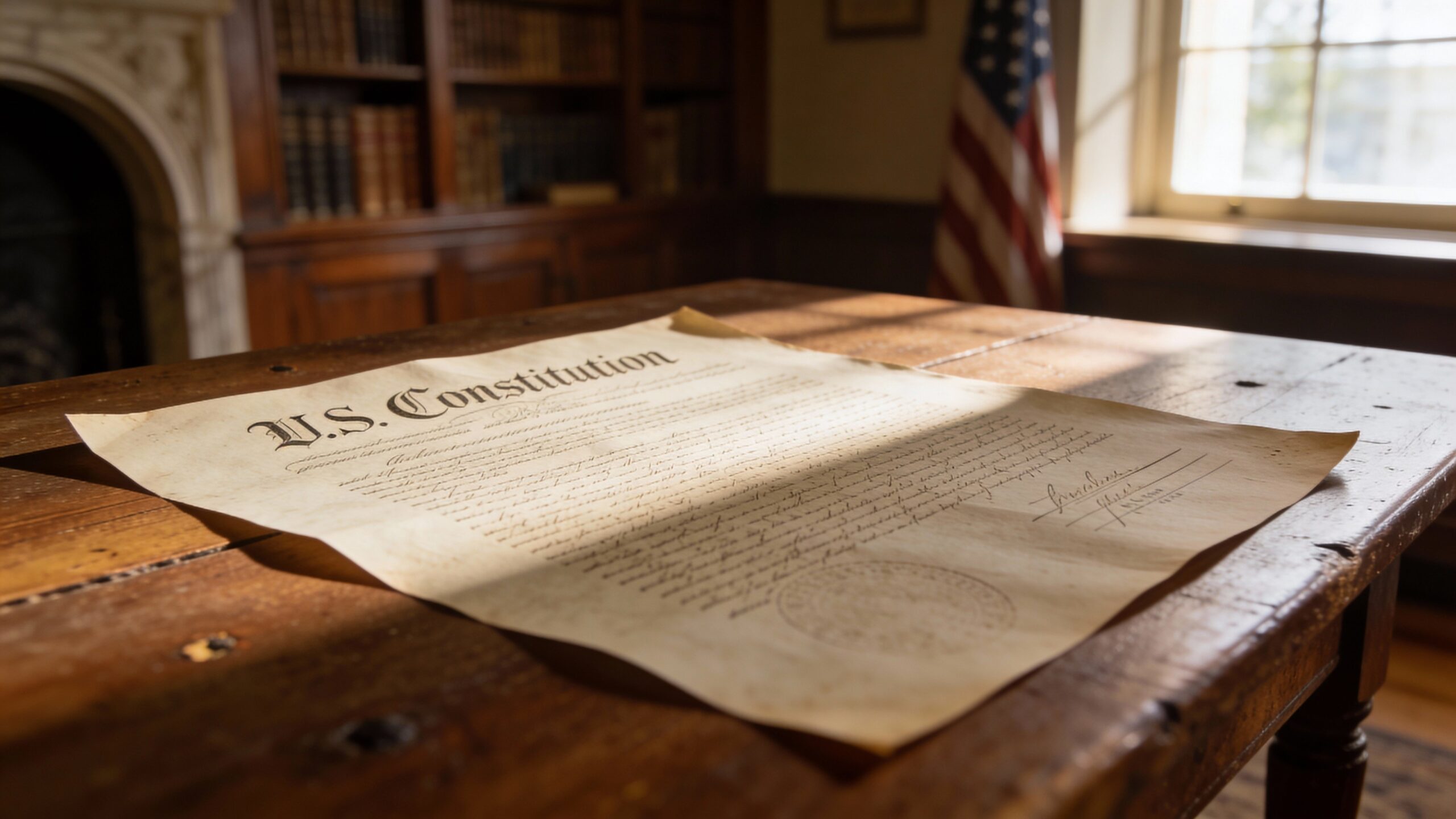
That balance explains much of the constitutional system they built. The Constitution was not written to celebrate power. It was written to channel it. Government would exist, but only through delegated powers, defined procedures, and structural restraints. The Founders understood that no free society can operate without government, but they also believed that every increase in political power should be met with a question: what prevents misuse? Their distrust was therefore constructive. It led them to build guardrails rather than simply complain about authority.
Separation of Powers Was a Defense Against Abuse
One of the most famous answers to concentrated authority was the separation of powers. The Founders divided government into legislative, executive, and judicial branches because they believed liberty was safer when power was fragmented. A single body making laws, enforcing laws, and judging violations would be too dangerous. Ambition had to be checked by ambition. Each branch needed enough independence to resist encroachments by the others.
This structure reflected a hard-earned realism. The Founders did not expect branches of government to behave like selfless partners in a perfect civic project. They expected conflict. In fact, they designed for it. Institutional rivalry was not an accidental flaw in the system. It was a protective feature. Their distrust of government power led them to believe that divided authority would be less able to dominate the people than unified authority. By making government compete internally, they hoped to make liberty more secure externally.
Federalism Reflected Fear of Centralized Control
The Founders also distrusted the concentration of power in one national center. Federalism, the division of authority between national and state governments, was another way of preventing excessive control. The states were not merely administrative regions. They were important political communities with their own laws, traditions, and spheres of action. By splitting sovereignty, the Founders created another barrier against consolidation.
This mattered because centralized power can become both efficient and distant. The farther authority moves from the people, the easier it becomes for rulers to govern abstractly rather than responsively. Federalism was meant to keep government closer to local conditions while denying any single level of power a total monopoly. The Founders knew this arrangement could produce tension, but they preferred tension to unchecked dominance. In their view, liberty was better protected in a system where authority was shared, disputed, and limited.
The Bill of Rights Drew a Line Government Could Not Cross
The Bill of Rights is perhaps the clearest expression of the Founders’ distrust of government power. These amendments did not grant rights as gifts from the state. They recognized freedoms the government was forbidden to violate. Speech, religion, press, assembly, petition, due process, protection from unreasonable searches, and the right to a jury trial were placed outside ordinary political convenience. This was a direct response to the fear that even representative governments can become abusive.
The logic was simple and profound. If rights depend entirely on government goodwill, they are not secure rights at all. They are permissions. The Founders wanted certain liberties to stand beyond shifting majorities and temporary passions. That is why the Bill of Rights reads largely as a series of prohibitions aimed at government. It reveals a generation that believed power must be told where it stops. Without such boundaries, law can become a tool of intrusion rather than a shield of freedom.
Standing Armies and Executive Power Raised Alarm
The Founders carried a special suspicion toward standing armies and concentrated executive power. In the eighteenth century, many people associated permanent military force with monarchy and coercion. An army under centralized control could be used not only against foreign enemies, but against citizens. The experience of British troops in the colonies made this fear more immediate. The executive branch, if backed by force and shielded from accountability, could easily become the center of dangerous power.
This does not mean the Founders wanted a powerless executive. They recognized the need for energy, decisiveness, and national defense. But they were careful about terms of office, elections, civilian authority, and constitutional limits. They wanted an executive capable of acting, but not one free from restraint. Their fear was not only of kings in crowns. It was of any executive who could begin to operate above law, around law, or beyond effective resistance.
Majorities Could Be Dangerous Too
The Founders did not believe the only threat came from kings or elites. They also worried about majorities. A majority, in their view, could become oppressive if it used government power to silence, punish, or strip rights from minorities. This is one reason they built a republic rather than a pure democracy. Representation, staggered terms, an independent judiciary, and constitutional limits were all ways of slowing immediate popular passions.
This part of their thinking is especially revealing. They distrusted government power even when that power carried democratic approval. Popular support alone did not make an action just or safe. The Founders believed freedom required more than elections. It required limits on what even majorities could do through the state. That idea remains one of the most enduring and controversial features of the American system. It shows how deeply they feared any political force, whether royal or popular, that became absolute.
Property, Independence, and Liberty Were Connected
For many Founders, property was not just an economic matter. It was tied to independence. A citizen who could own property, run a household, and sustain a degree of personal autonomy was less vulnerable to domination. Government that could arbitrarily seize property, manipulate livelihoods, or redistribute political favor threatened more than wealth. It threatened the independence that made self-government possible.
This helps explain why the Founders often linked liberty to legal stability, secure contracts, and protection against arbitrary deprivation. They believed citizens needed a sphere of life the state could not casually invade. When government power expands into every corner of economic life, it can influence behavior, reward loyalty, and punish resistance. The Founders saw such leverage as dangerous. Their distrust grew from the belief that free people must retain room to live, speak, worship, work, and think without constant dependence on political authority.
Their Distrust Produced a System of Deliberate Friction
Modern observers often criticize the American system for being slow, argumentative, and resistant to sweeping action. In many cases, that slowness is not a defect from the Founders’ point of view. It is the point. They built a constitutional order full of friction because they believed power should have difficulty moving quickly. Delays, debates, veto points, divided jurisdictions, and layered procedures were all ways of reducing the chance that temporary passions or ambitious officials could rapidly transform the entire system. This design can be frustrating, especially in moments of crisis. But the Founders saw speed as politically dangerous when attached to concentrated power. They preferred a government that required persuasion, bargaining, and broad support before major action could occur. Their distrust of power led them to treat efficiency with caution. A government that can do everything easily may eventually do too much.
Why Their Distrust Still Matters
The Founders’ distrust of government power continues to matter because the temptation of power has not disappeared. Technology, surveillance capacity, administrative complexity, emergency claims, and ideological polarization all create modern opportunities for authority to expand. The specific forms have changed, but the underlying question remains familiar: how much power can a government hold before liberty begins to narrow?
This does not mean every public action is tyranny or every exercise of authority is corrupt. The Founders would likely reject such extremes. Their lesson is subtler and more enduring. Power should never be treated as harmless simply because its goals sound noble or its methods look legal. Citizens should ask what precedent is being set, what rights are being pressured, what safeguards remain, and whether exceptional powers will ever truly recede. Distrust, in this tradition, is not cynicism. It is civic vigilance.
The Founders Built With Worry, Not Naivety
Perhaps the most important thing to understand is that the American system was built by people who worried. They worried about corruption, ambition, force, majority passion, executive excess, and institutional decay. They worried because they knew freedom is easier to lose than to recover. Their distrust of government power was not a rejection of society or order. It was an attempt to preserve human dignity against the predictable tendencies of authority. That is why their work still feels alive. The Constitution, the Bill of Rights, and the broader structure of American government were created by leaders who believed liberty needed more than good intentions. It needed barriers, limits, and citizens who remembered why those barriers existed. The Founders distrusted government power because they understood something permanent about politics: once power becomes comfortable with few restraints, it rarely volunteers to become smaller. Their answer was not paralysis, but constitutional discipline. Their warning was not against government alone, but against forgetting what government can become when people stop watching it closely.