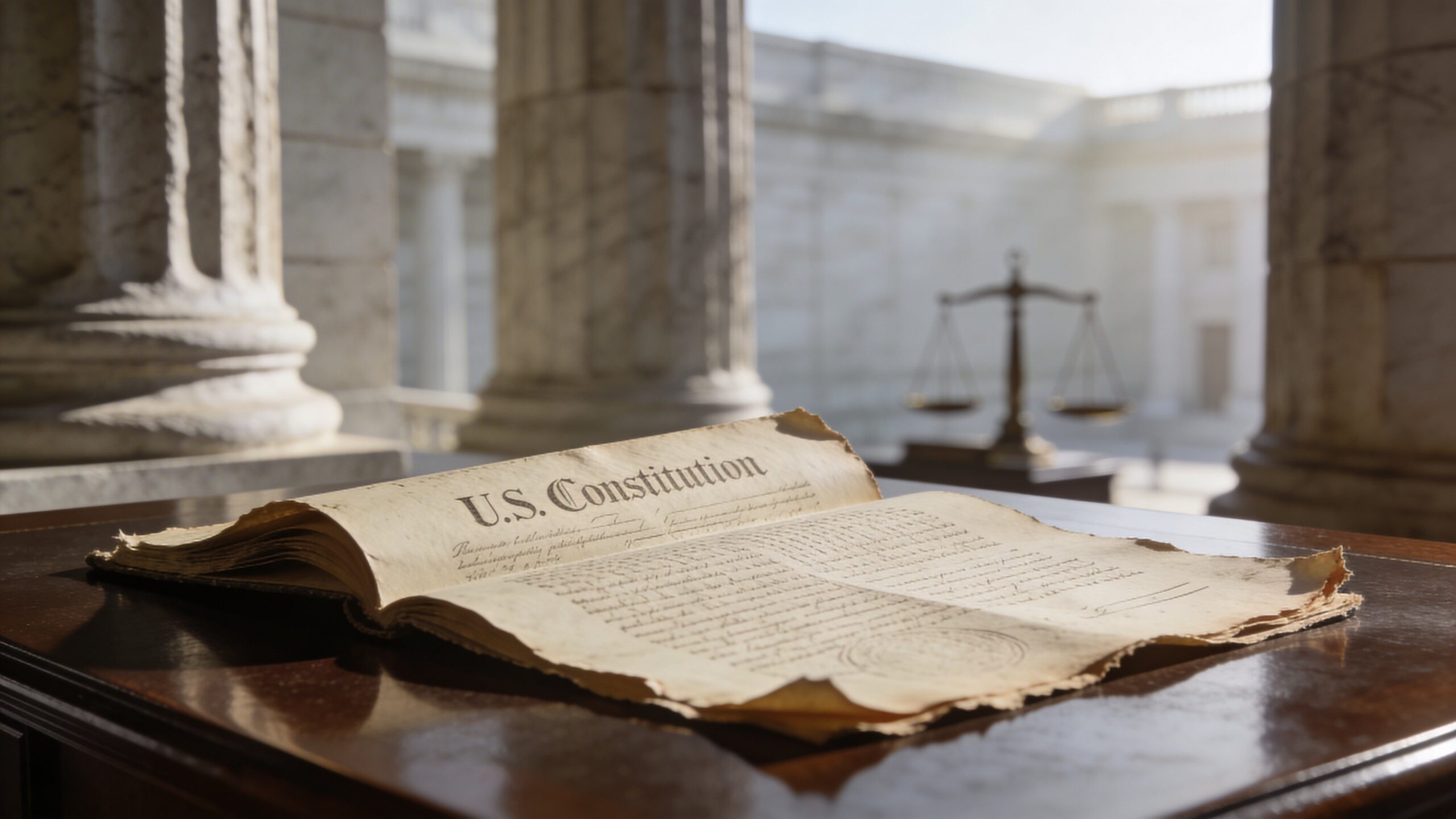
The principle of separation of powers sits at the heart of the American constitutional system, shaping everything from how laws are made to how liberty is preserved. To modern readers, dividing government authority among branches can seem like an abstract design choice or a technical feature of governance. For the Founders, however, it was a moral and historical necessity. They believed concentrated power was the most reliable path to tyranny, and they had centuries of political experience to prove it. The separation of powers was not invented for efficiency or elegance; it was built as a safeguard against human ambition, corruption, and the misuse of authority. Understanding why the Founders feared concentrated power requires looking beyond the Constitution’s text and into the political philosophy, historical trauma, and practical realism that informed their choices. The separation of powers emerged from a deep skepticism of unchecked authority and a clear-eyed view of human nature.
A: The Founders assumed leaders are human and fallible.
A: Separation creates branches; checks enforce limits.
A: Yes—deliberately, to protect liberty.
A: No—authority is shared and contested.
A: To uphold law without political pressure.
A: Conflict forces negotiation and compromise.
A: No—but it makes abuse harder.
A: It influenced many modern constitutions.
A: Yes, through amendments and interpretation.
A: Power still seeks concentration.
The Historical Roots of the Fear of Power
The Founders did not fear power in the abstract; they feared power based on lived experience and recorded history. English political history loomed especially large in their thinking. The American colonies had spent decades under a system where legislative, executive, and judicial authority ultimately flowed from the British Crown and Parliament. While Parliament claimed to represent the people, colonists experienced taxation without representation, arbitrary enforcement of laws, and a distant authority unresponsive to colonial interests.
The abuses attributed to King George III in the Declaration of Independence were not simply rhetorical flourishes. They reflected a genuine belief that centralized authority, when insulated from accountability, inevitably erodes liberty. Governors dissolved colonial assemblies, judges served at the pleasure of the Crown, and military power was used to enforce civil authority. These experiences convinced American leaders that freedom could not survive where power was unified.
This fear was reinforced by classical history. Ancient Rome’s transition from republic to empire stood as a cautionary tale. Temporary dictatorships created during crises slowly became permanent, and power once consolidated proved nearly impossible to reclaim. For the Founders, Rome demonstrated that even well-designed systems collapse when authority concentrates in the hands of a few.
Philosophical Foundations of the Separation of Powers
Enlightenment political philosophy gave structure to these historical fears. Among the most influential thinkers was Montesquieu, whose work The Spirit of the Laws profoundly shaped American constitutional design. Montesquieu argued that liberty depends on the division of governmental power into separate branches, each capable of checking the others. When legislative, executive, and judicial powers are combined, he warned, freedom cannot survive.
This philosophy resonated deeply with American leaders because it aligned with their own observations. Power, they believed, was not self-regulating. It expanded naturally unless restrained by opposing forces. Separation of powers was therefore not about trusting leaders to behave virtuously, but about creating a system in which ambition counteracts ambition.
The Founders embraced this realism. Rather than designing government around ideal citizens, they designed it around imperfect human beings. Political structures had to assume selfishness, pride, and the temptation to abuse authority. Dividing power was the most reliable way to prevent those traits from becoming destructive.
Human Nature and the Distrust of Authority
Few statements capture the Founders’ view of power more clearly than the writings of James Madison. In Federalist No. 51, Madison famously argued that if men were angels, no government would be necessary. Because they are not, government must be both strong enough to govern and restrained enough to prevent abuse.
This dual challenge explains why separation of powers became so central to the Constitution. A government powerful enough to enforce laws and defend the nation could also become powerful enough to oppress its people. The Founders resolved this tension by dispersing authority. Each branch was given enough power to fulfill its role, but not enough to dominate the system.
Madison’s insight reflects a broader philosophical humility. The Founders did not assume future leaders would be wise or benevolent. They assumed, instead, that leaders would be tempted to expand their influence. By dividing power, the system itself would resist those impulses, even when individuals failed.
Lessons from Monarchy and Absolute Rule
Monarchical systems provided a living example of the dangers of concentrated power. In Europe, kings often controlled lawmaking, law enforcement, and the courts. Even when rulers claimed divine right or benevolent intentions, the absence of institutional limits led to abuses. Arbitrary imprisonment, censorship, and selective enforcement of laws were common features of centralized authority.
The American Revolution was, in part, a rejection of this model. The Founders did not want a different king; they wanted no king at all. Yet they also understood that power could reemerge in new forms. A legislature, if unchecked, could become as tyrannical as a monarch. A popular executive could exploit public support to override legal limits. Separation of powers was designed to prevent any branch from becoming a substitute for monarchy.
This suspicion extended even to democratic institutions. The Founders feared what they called “the tyranny of the majority,” where popular sentiment could overwhelm minority rights. Dividing power among branches, levels of government, and staggered terms was a way to slow political passions and force deliberation.
The Structure of the American System
The Constitution reflects these fears through its careful distribution of authority. Legislative power is vested in Congress, executive power in the presidency, and judicial power in the courts. Each branch has distinct responsibilities, but none operates in isolation. The president can veto laws, Congress can override vetoes, courts can review constitutionality, and judges are appointed through a shared process.
This interdependence was deliberate. The Founders wanted friction built into the system. Efficiency was less important than restraint. Laws would be harder to pass, but they would also be harder to abuse. No single branch could act decisively without cooperation from the others, reducing the risk of sudden or unilateral tyranny.
Importantly, separation of powers was never meant to create rigid silos. The branches overlap by design. This overlap ensures accountability while preserving independence. The system works not because power is neatly divided, but because it is constantly contested within defined boundaries.
Separation of Powers and Liberty
For the Founders, liberty was inseparable from structure. Rights written on paper meant little if the same authority that made laws also enforced and interpreted them. By separating powers, the Constitution made it more difficult for any one institution to violate individual freedoms without resistance.
This protection was both practical and psychological. Citizens could trust that grievances might find a hearing in another branch if one abused its authority. Judges insulated from political pressure could protect unpopular rights. Legislators could investigate executive misconduct. Executives could act decisively in emergencies without rewriting the law.
The Founders believed that freedom survives not through promises but through institutions. Separation of powers turned liberty from an abstract ideal into a functional reality.
Early Tests of the System
The early republic tested these ideas almost immediately. Disputes between Congress and the presidency, debates over judicial authority, and conflicts between federal and state power revealed both the strengths and tensions of the system. These struggles were not failures; they were evidence that the system was working as intended.
Power did not flow smoothly because it was not meant to. The friction between branches forced negotiation, compromise, and restraint. While this often frustrated political actors, it protected the broader public from rapid or extreme shifts in authority. Even controversial episodes demonstrated the value of separation. When one branch overreached, others pushed back. This dynamic reinforced the Founders’ belief that liberty depends on structure rather than trust.
The Role of the Courts in Preventing Concentration
The judiciary plays a unique role in the separation of powers. While lacking direct enforcement power, courts act as guardians of constitutional boundaries. Judicial review ensures that neither Congress nor the president exceeds the limits set by the Constitution.
This role reflects the Founders’ fear that written limits alone were insufficient. Laws can be stretched, and power can be rationalized. Courts provide an institutional check that operates independently of political cycles, protecting long-term constitutional principles against short-term political pressures.
By separating judicial authority from legislative and executive control, the Founders aimed to preserve impartiality. Courts would serve not the will of the moment, but the enduring framework of the Constitution.
Modern Challenges to the Separation of Powers
In the modern era, the separation of powers continues to face pressure. Expanding executive authority, legislative delegation to administrative agencies, and political polarization test the balance envisioned by the Founders. Yet these challenges underscore rather than undermine the relevance of their fears.
Concentrated power often emerges gradually, justified by efficiency, crisis, or necessity. The Founders anticipated this tendency. They understood that emergencies tempt societies to trade liberty for security, and that temporary measures can become permanent. Separation of powers remains a critical defense against such drift. Modern debates over executive orders, regulatory authority, and judicial interpretation are not signs of a failing system. They are reminders that maintaining liberty requires constant vigilance and institutional resistance to concentration.
Why the Founders’ Fear Still Matters
The Founders’ fear of concentrated power was not paranoia; it was prudence. History showed them that liberty is fragile and power persistent. By dividing authority, they created a system capable of governing a diverse nation without surrendering its freedoms.
Separation of powers does not guarantee good government, but it makes bad government harder to impose. It channels ambition into competition, forces transparency through conflict, and protects individuals through institutional rivalry. These features reflect a profound understanding of human nature and political reality.
In a world where power often seeks consolidation, the American system stands as a reminder that freedom thrives best when authority is divided, limited, and contested. The Founders’ fear was not of government itself, but of unchecked government. Their solution remains one of the most enduring contributions to political liberty in history.
Conclusion: A System Built on Caution and Hope
The separation of powers embodies both caution and optimism. It assumes that people are flawed, yet capable of self-government if institutions are wisely designed. By fearing concentrated power, the Founders did not reject authority; they refined it. Their legacy is a constitutional structure that resists tyranny not through trust in leaders, but through balance. In an age of rapid change and intense political pressure, that legacy remains as vital as ever. The separation of powers is not merely a constitutional doctrine; it is a living expression of the Founders’ deepest insight: that liberty survives when power is never allowed to stand alone.