The Constitution as a Boundary Line
The Constitution is often described as a foundation, a framework, or a national promise. But one of its most important roles is simpler and sharper: it tells government where to stop. It does not merely create branches, assign duties, or explain elections. It places limits on power so that public authority cannot become unlimited authority. That idea is central to American constitutional government. The people give government certain powers so it can protect order, defend rights, provide public services, enforce laws, and resolve disputes. Yet those powers are not blank checks. The Constitution draws boundary lines around what officials may do, how they may do it, and what rights they must respect along the way.
A: It means government power is restricted by the Constitution, laws, rights, and checks and balances.
A: Sometimes, but it generally cannot punish protected speech just because officials dislike the message.
A: Yes, several protections limit government searches, seizures, surveillance, and intrusion into private life.
A: Due process means government must use fair legal procedures before taking life, liberty, or property.
A: Sometimes for public use, but it must follow the law and provide just compensation.
A: It means government cannot unfairly deny people equal treatment under the law.
A: Government may gain some emergency flexibility, but constitutional limits usually still apply.
A: Courts often decide constitutional disputes, but voters, lawmakers, the press, and public oversight also matter.
A: Many major rights protections apply to states through the Fourteenth Amendment.
A: They protect liberty, prevent abuse, and keep government accountable to the people and the law.
Why Constitutional Limits Matter
Without constitutional limits, government could act according to convenience, pressure, popularity, fear, or political advantage. It could punish unpopular opinions, search homes without cause, take property without fair process, favor one group over another, or rewrite the rules whenever leaders found the rules inconvenient. Constitutional limits protect the individual against the force of the state. They also protect society as a whole by keeping public power predictable, lawful, and accountable. A free country does not depend only on good leaders. It depends on rules strong enough to restrain leaders when ambition, panic, or public anger pushes them too far.
Government Cannot Silence Protected Speech
One of the clearest constitutional limits is that government cannot punish people simply because officials dislike what they say. The First Amendment protects speech, press, religion, assembly, and petition. These freedoms create space for criticism, debate, protest, journalism, advocacy, art, and public disagreement.
That does not mean every form of expression is protected in every setting. Threats, harassment, fraud, and certain forms of incitement may fall outside protection. But the central rule remains powerful: government cannot silence speech because it is unpopular, embarrassing, offensive, inconvenient, or critical of those in power.
Government Cannot Control Belief
The Constitution protects more than spoken words. It also protects belief, conscience, and religious freedom. Government cannot force people to hold approved beliefs, punish them for private convictions, or require loyalty to an official ideology.
Religious liberty includes both the freedom to practice faith and the freedom not to practice one. Government may not establish an official religion or use public power to prefer one faith over another. This limit protects spiritual life from political control and protects politics from becoming a tool of religious coercion.
Government Cannot Punish Without Due Process
Due process is one of the Constitution’s strongest shields against arbitrary power. At its core, it means government must follow fair procedures before taking away life, liberty, or property. Officials cannot simply decide someone is guilty, dangerous, undeserving, or inconvenient and then impose punishment without lawful process. Due process requires notice, a meaningful opportunity to be heard, and decision-making that follows established legal rules. In criminal cases, it supports protections such as the right to counsel, the right to confront witnesses, the right to remain silent, and the right to a fair trial. In civil settings, it can protect people from unfair deprivation of benefits, property, licenses, or legal status.
Government Cannot Search Without Constitutional Justification
The Fourth Amendment limits the government’s power to search people, homes, papers, effects, vehicles, phones, and private spaces. It reflects a simple but powerful principle: government cannot invade privacy whenever it wants. Searches and seizures generally require reasonableness, and many require a warrant based on probable cause.
This protection matters because privacy is connected to freedom. A person who can be watched, searched, and seized without cause is not truly secure. Constitutional search limits prevent law enforcement from turning suspicion into unlimited access and prevent government power from entering private life without legal justification.
Government Cannot Take Property Without Legal Safeguards
The Constitution also limits how government may take private property. Under the Takings Clause, private property cannot be taken for public use without just compensation. Government may have the power to build roads, schools, utilities, and public facilities, but that power must respect ownership and fairness.
Property rights do not only protect landowners or businesses. They protect ordinary people from sudden government seizure, arbitrary confiscation, or unfair economic burden. When government needs private property for public purposes, the Constitution demands accountability, lawful procedure, and compensation.
Government Cannot Treat People Unequally Without Justification
Equal protection means government cannot deny people the equal protection of the laws. This principle stands against laws and policies that unfairly discriminate or create unequal treatment without sufficient justification. It is one of the major constitutional tools used to challenge government action that targets or burdens particular groups. Equal protection does not mean every law must affect every person identically. Laws often classify people by age, location, profession, income, or conduct. But when government classifications burden fundamental rights or target protected groups, courts examine them more closely. The deeper idea is that public power must not become a weapon of unfair favoritism, exclusion, or oppression.
Government Cannot Create Criminal Laws After the Fact
The Constitution forbids ex post facto criminal laws. That means government cannot make an action criminal after someone has already done it and then punish that person retroactively. It also cannot retroactively increase the punishment for a past crime.
This limit protects basic fairness. People must be able to know what the law requires before they are punished for violating it. A government that can rewrite yesterday’s rules to punish yesterday’s conduct holds a terrifying power. The Constitution blocks that kind of backward-looking punishment.
Government Cannot Punish Without a Real Trial
The Constitution also rejects bills of attainder, which are laws that punish specific people or groups without a judicial trial. This limit prevents legislatures from acting like courts by declaring someone guilty and imposing punishment through political process alone.
The separation between lawmaking and judging is essential. Legislatures write general rules. Courts decide guilt or liability through procedures, evidence, and legal standards. When lawmakers try to punish named individuals directly, they bypass the protections that make justice more than political revenge.
Government Cannot Use Cruel and Unusual Punishment
The Eighth Amendment limits the government’s power to punish. It prohibits cruel and unusual punishments, excessive fines, and excessive bail. These protections recognize that even when someone is accused or convicted, the government’s authority is not unlimited.
Punishment must remain within constitutional bounds. The justice system may impose consequences, but it cannot abandon human dignity. This limit reflects the belief that a constitutional society is judged not only by how it treats the powerful or popular, but also by how it treats those accused, convicted, imprisoned, or vulnerable.
Government Cannot Force Self-Incrimination
The Fifth Amendment protects people from being compelled to testify against themselves in criminal cases. This means government cannot force a person to become the tool of their own prosecution. The burden is on the government to prove guilt, not on the individual to prove innocence through coerced confession. This protection is especially important during interrogations and criminal investigations. Without it, pressure, fear, confusion, and intimidation could replace evidence. The right against self-incrimination helps preserve the fairness of the justice system by limiting how the state may use its power against an accused person.
Government Cannot Deny the Right to Counsel
In serious criminal cases, the Constitution protects the right to assistance of counsel. This right recognizes that legal systems are complex, charges can be life-changing, and ordinary people cannot always defend themselves effectively against trained prosecutors and government resources.
The right to counsel is not a technical detail. It is a practical safeguard. A person without legal help may not understand the charges, the evidence, the available defenses, or the consequences of decisions. Constitutional limits require the criminal process to be more than a contest between power and confusion.
Government Cannot Ignore the Right to a Fair Trial
A fair trial is one of the Constitution’s most important promises. The government cannot convict someone through secret evidence, biased proceedings, unreasonable delay, or a process that denies meaningful defense. The accused has rights because the government has power, and power must be tested before liberty is taken away.
Trial protections include the right to an impartial jury in many criminal cases, the right to confront witnesses, the right to compulsory process for obtaining witnesses, and the right to be informed of the accusation. Together, these limits transform criminal justice from raw accusation into disciplined proof.
Government Cannot Restrict Voting Unfairly
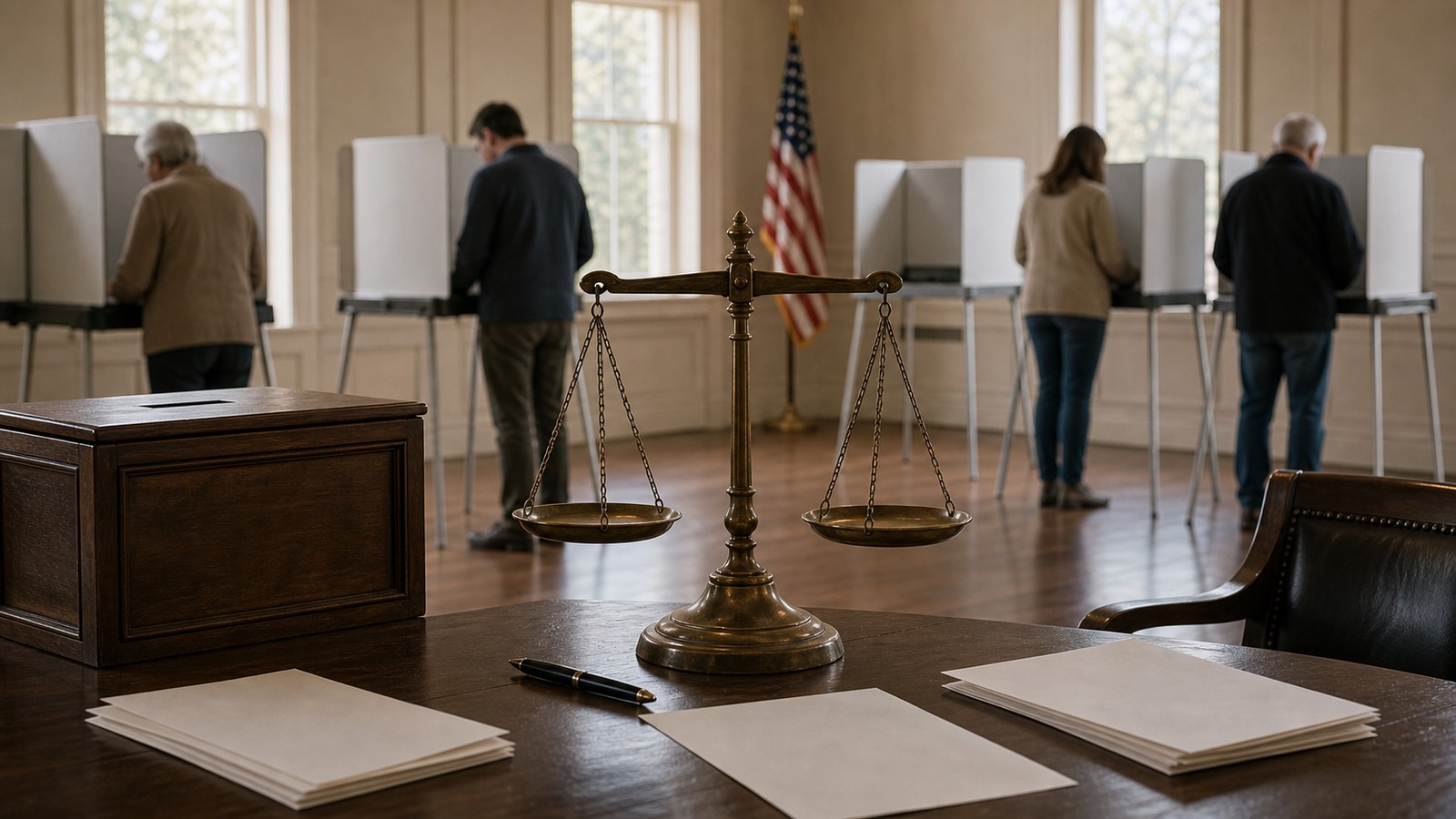
Voting is the mechanism through which the people control government. Constitutional amendments and legal principles limit the government’s ability to deny or burden the vote based on race, sex, failure to pay certain taxes, or age for citizens eighteen and older. Voting rules can still exist. States administer elections, set procedures, and regulate ballots. But constitutional limits prevent those rules from being used as tools of exclusion. A government that can choose its voters instead of being chosen by them threatens representative democracy itself.
Government Cannot Violate Separation of Powers
The Constitution divides power among legislative, executive, and judicial branches. Congress makes laws, the executive enforces them, and courts interpret them in cases and controversies. This structure is not just organizational. It is a limit on what any one part of government may do.
Separation of powers prevents authority from pooling in one place. If one branch tries to seize the role of another, constitutional conflict arises. The system is designed to slow power down, force accountability, and prevent government from acting through unchecked concentration.
Government Cannot Override Federalism Without Limits
Federalism divides authority between the national government and the states. The federal government has significant powers, but they are not unlimited. States also have constitutional roles, especially over many areas of local law, public safety, education, licensing, and civil regulation.
This division can be messy, but it is another restraint on centralized power. Federalism prevents every question from being controlled by one national authority while still allowing federal power to protect constitutional rights and address national concerns. The balance itself is a constitutional limit.
Government Cannot Suspend Rights Simply Because It Is Convenient
Emergencies test constitutional limits. War, unrest, disaster, public fear, and crisis can create pressure for fast and forceful government action. The Constitution allows government to respond to emergencies, but it does not usually disappear during them.
This matters because some of history’s greatest abuses happen when fear makes people willing to trade liberty for security without clear limits. Constitutional government requires that even urgent action remain tied to lawful authority, reviewable decisions, and respect for rights.
Government Cannot Avoid Accountability
The Constitution creates multiple accountability systems. Elections hold officials politically accountable. Courts review certain government actions. The press investigates. The people petition and protest. Impeachment, oversight, public records, and legal challenges all reflect the same idea: government must answer for what it does. Accountability is not a single rule. It is a constitutional culture. Government officials are not above the law simply because they enforce it, write it, or interpret it. Constitutional limits mean power must be explained, justified, challenged, and corrected when it crosses the line.
Government Cannot Make Rights Depend on Popularity
Rights are most important when they protect unpopular people, unpopular views, and unpopular causes. If constitutional rights only applied when the majority approved, they would not be rights at all. They would be permissions.
The Constitution protects freedoms that majorities may sometimes dislike. It limits what government can do even when a policy has political support. That is one of the defining features of constitutional democracy: majority rule exists, but it operates within boundaries that protect individual liberty and minority rights.
Government Cannot Rewrite the Constitution by Ordinary Power
Government officials cannot simply change constitutional meaning by preference, policy, or ordinary legislation. The Constitution can be amended, but that process is deliberately difficult. This keeps fundamental rules from shifting with every election or political mood.
Courts interpret constitutional provisions, lawmakers debate their reach, and citizens argue about their meaning. But ordinary government power remains subordinate to constitutional authority. The Constitution is higher law, and higher law limits everything below it.
The Living Importance of Constitutional Limits
Constitutional limits are not museum pieces. They shape real life every day. They affect what police may do at a traffic stop, how schools handle speech, how courts conduct trials, how agencies regulate property, how legislatures write laws, and how officials treat people who disagree with them.
The Constitution’s limits do not make government weak. They make government legitimate. A government that respects boundaries earns trust because its power is disciplined by law. The true strength of constitutional government is not that it can do anything. It is that it refuses to do certain things, even when doing them would be easier.
The Line That Protects Liberty
The question “What is government not allowed to do?” is one of the most important questions in civic life. It reminds us that rights are not favors from officials. They are constitutional protections that stand between the individual and the state. Government may govern, but it may not rule without limits. It may enforce laws, but not above the law. It may protect public order, but not by destroying liberty. It may represent the people, but not erase the rights of the person. Constitutional limits are the guardrails of freedom, and they remain essential wherever power meets human life.