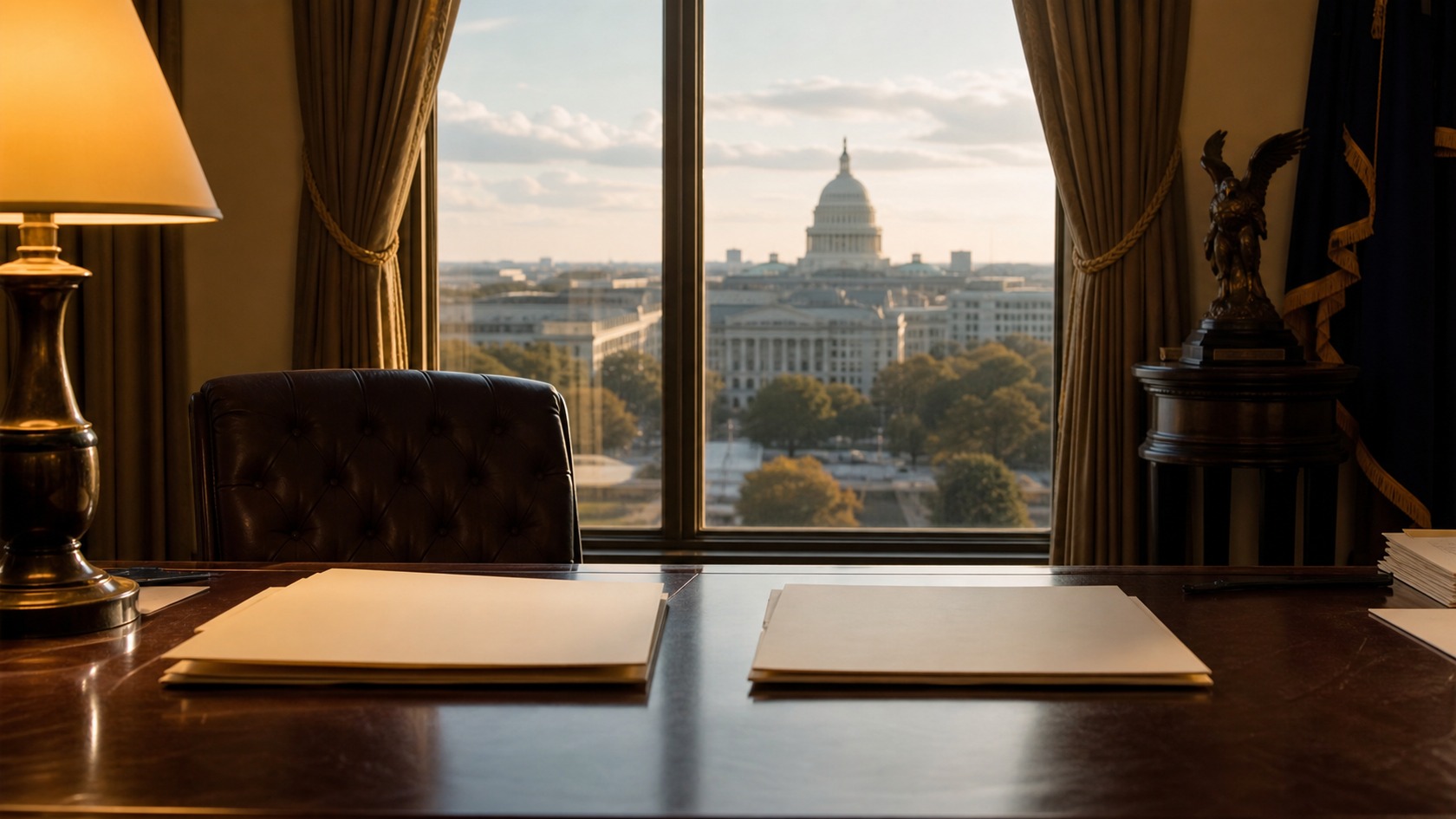
Federalism in Crisis: How Power Shifted to Washington
Federalism shifted toward Washington during wars, economic collapse, civil rights struggles, administrative growth, and national emergencies. The shift did not happen all at once, and it was not always wrong. Crises often reveal state weakness and demand national action. The danger is that temporary centralization can become a permanent habit after the crisis passes.
A: Crises rewarded scale, speed, funding, coordination, and visible national action.
A: No. Some shifts addressed real national problems and protected constitutional rights.
A: It made states dependent on funds tied to national conditions and policy designs.
A: They turned temporary programs into lasting administrative capacity.
A: Yes. States often accepted funds, requested help, and relied on federal programs.
A: State abuses made national enforcement necessary to protect equal citizenship.
A: It nationalizes local disputes and creates pressure for federal solutions.
A: Yes, if states govern competently and national powers are limited after emergencies.
A: It can turn exceptional authority into ordinary expectation.
A: Use national capacity where truly needed while restoring limits when crisis conditions pass.
Crises Reward Central Speed
Crisis politics rewards speed, scale, and coordination. State governments may act unevenly, local institutions may lack capacity, and citizens may demand visible national action. In those moments, Washington can look like the only institution large enough to respond quickly.
That pressure is understandable. A war, depression, pandemic, financial collapse, or rights emergency can expose failures that no single state can solve alone. National power may be necessary when the problem crosses borders, overwhelms state capacity, or threatens constitutional guarantees.
The federalism problem begins when emergency logic becomes ordinary logic. A tool justified by crisis may remain in place, expand its mission, and reshape expectations. Citizens then begin to assume that national management is normal even for problems once handled closer to home.
The appeal of speed can make decentralization look irresponsible. Yet speed is only one value in constitutional government. Federalism asks whether rapid action is authorized, accountable, and limited after the urgent need passes. A crisis response can be strong without becoming a blank check for every later decision.
The deeper test comes after public fear recedes. If the crisis justification remains broad while the emergency facts have changed, central power starts to rest on habit rather than necessity.
War Expanded National Capacity
War has repeatedly strengthened national authority. Mobilization requires taxation, borrowing, production, logistics, command, intelligence, and national coordination. Each major conflict left behind institutions, habits, and capacities that made Washington more capable than before.
Some of that growth was unavoidable. A country cannot fight a large war as fifty separate military systems. But wartime structures can also outlast the emergency, and citizens may become accustomed to federal reach in areas that were previously distant from national administration.
Wartime capacity also changes imagination. Once citizens see Washington direct enormous resources, they may expect similar command in domestic disputes. That expectation can be useful when coordination is truly national, but it can weaken patience for state variation and local self-government when the issue is not actually warlike in scale.
Economic Collapse Changed Expectations
Economic crisis also shifted power toward Washington. When markets fail on a massive scale, state responses can be uneven and underfunded. Citizens look for national relief, banking stability, employment support, and regulatory reforms that no state can provide alone.
The New Deal era dramatically changed public expectations about what the federal government should do. Federal programs reached employment, agriculture, finance, labor, retirement, infrastructure, and social welfare. Many people came to see national action as the practical answer to economic insecurity.
That shift brought real benefits and real constitutional controversy. It helped many citizens and stabilized institutions, but it also expanded federal involvement in ordinary economic life. Critics argue that emergencies allowed Washington to occupy policy fields once left mainly to states.
The legacy is still with us. Modern debates about health care, housing, wages, banking, energy, and welfare often begin with the assumption that national solutions are available. Federalism requires asking whether availability is the same as proper authority or wise design.
Economic emergencies also create moral urgency. When people lose homes, savings, farms, jobs, or access to credit, constitutional abstractions can sound remote. A durable federalism argument must acknowledge that suffering while still asking how power should be allocated. Otherwise, decentralization will appear indifferent and centralization will appear humane by default.
Civil Rights Forced National Enforcement
Civil rights struggles also shifted power toward Washington, and for reasons that cannot be dismissed. States had often denied equal citizenship, tolerated violence, and maintained unjust systems. National enforcement became necessary when state governments failed to protect constitutional rights.
This history complicates simple decentralization arguments. Federal power can threaten liberty when it overreaches, but it can also protect liberty when states violate rights. Civil rights enforcement showed that state authority must operate under constitutional guarantees, not outside them.
The lesson is not that every national intervention is justified by invoking rights. The lesson is that federalism is bounded by equal citizenship. A state cannot demand autonomy for practices that deny constitutional protection to people under its authority.
Civil rights enforcement also changed the meaning of national authority in public memory. For many Americans, Washington became not only a distant power but also the institution that could compel states to honor rights. That experience remains one reason federalism debates must speak honestly about both state abuse and federal overreach.
Administrative Agencies Became Permanent
Administrative agencies turned crisis programs into permanent governing capacity. Agencies can write rules, distribute funds, enforce standards, collect data, and coordinate complex programs. Once built, that machinery rarely disappears completely.
Agencies also centralize expertise. Expertise can improve policy, but it can distance decisions from voters and state institutions. When more law is made through national administration, states may become implementers rather than independent constitutional actors.
Permanent agencies accumulate rules, staff, data systems, enforcement habits, and relationships with state counterparts. Over time, state officials may organize their own work around federal expectations. That kind of centralization can happen slowly, without dramatic statutes, until the original emergency purpose is only a small part of the agency’s modern reach.
Federal Money Pulled States In
Federal grants changed the state-federal relationship by making national money a routine part of state governance. States administer major programs with federal funding, follow federal conditions, and build budgets around national support. Cooperation can help deliver services, but it can also pull states into Washington’s policy orbit.
The result is often blended authority. A state office may appear to run a program, but federal statutes, regulations, waivers, formulas, and grant conditions shape the choices available. Citizens may not know which government made the real decision.
This funding relationship can centralize without direct command. Washington does not always need to order states if it can set terms attached to money. States may accept those terms because refusal is politically costly or financially disruptive.
Federalism becomes weaker when money hides accountability. If national officials design the rules, they should answer for them. If state officials accept the terms, they should explain why the tradeoff was worth it.
Budget dependence can also alter state political culture. Instead of asking what a state should do with its own resources, lawmakers may ask how to maximize federal reimbursement or avoid losing a formula share. That incentive makes state policy less independent, even when the legislature still votes on the final budget.
Courts Reinterpreted Boundaries
Court doctrine also helped shift power. Interpretations of commerce, spending, enforcement powers, preemption, and rights changed over time. Some decisions allowed broader national regulation, while others later restored or defended limits.
This legal movement shows that federalism is not only a political habit. It depends on judicial interpretation of constitutional text and structure. When courts defer broadly to national power, Washington gains room. When courts enforce limits, states regain practical authority.
Neither direction is automatically right in every case. The question is whether doctrine preserves meaningful delegated power, valid rights enforcement, and real state authority at the same time.
Doctrine also shapes bargaining before any case is filed. If states believe courts will defer to federal agencies, they may negotiate from weakness. If federal officials believe limits will be enforced, they may draft narrower rules. Judicial interpretation affects the whole atmosphere of federal-state negotiation, not just the published opinions.
Media Nationalized Local Problems
Modern media turns local disputes into national causes quickly. A state law, school board decision, police controversy, health rule, or court case can become a national identity marker. That attention can expose genuine injustice, but it also creates pressure for national solutions to local problems.
This cultural centralization may be as powerful as legal centralization. Citizens learn to look upward first. They may ignore state legislatures and local institutions even when those bodies still have direct authority over the issue being argued.
The nationalization of attention can make state compromise harder. Local officials who might have settled a problem pragmatically may instead face national audiences demanding symbolic victory. Once a local issue becomes a national identity marker, federalism loses one of its advantages: the ability to solve practical problems without making every dispute a referendum on the whole country.
States Also Accepted The Shift
Washington did not gain power only by taking it. States often accepted, requested, or depended on federal involvement. They sought funds, asked for relief, relied on federal standards, and used national programs to avoid hard local choices.
That acceptance can be rational. States may lack resources, face cross-border problems, or need national coordination. But it also means state leaders share responsibility for centralization. They cannot always blame Washington for a relationship they helped build.
A serious federalism renewal would require states to govern more competently. Complaining about national control is easier than building fiscal discipline, administrative capacity, legal clarity, and public trust at the state level.
State responsibility is especially visible when officials prefer federal money with flexible blame. They can spend national funds while criticizing national interference, or accept conditions and later describe them as unavoidable. Voters should press state leaders to say which parts of the arrangement they chose and which parts they genuinely opposed.
Crisis Lessons Need Limits
The central lesson is that crisis can justify national power without making centralization the permanent answer to everything. Wars end, emergencies recede, markets recover, and administrative problems change. A healthy federal system should ask what emergency powers should sunset, narrow, or return to state responsibility.
Some national gains should remain, especially protections for constitutional rights and coordination for genuinely national problems. Other expansions should be examined with more skepticism. Federalism is not restored by pretending crises were fake; it is restored by refusing to let every future policy ride on crisis logic.
The shift to Washington happened through need, ambition, interpretation, money, habit, and state cooperation. That mixture makes the story more complicated than simple federal takeover. It also means renewal has to be practical, not merely rhetorical.
Power shifted to Washington because Americans repeatedly asked the national government to solve urgent problems. The question now is whether they can keep the useful lessons of national capacity while recovering the constitutional discipline that prevents every problem from becoming a federal command.
Limits can be built into law through sunset clauses, periodic review, narrower delegations, clearer grant terms, and stronger state reporting. They can also be built into political culture when citizens ask whether the emergency reason still exists. Federalism survives crises better when return paths are designed before emergency power becomes comfortable.
Those return paths are often less glamorous than emergency action, but they are where constitutional discipline is proven. Congress can review delegations, agencies can narrow rules, states can rebuild capacity, and voters can ask whether a crisis program has become ordinary governance by inertia. A federal system should be able to respond to danger without forgetting how to stand down.