A Criminal Case Is a Sequence of Decisions, Not One Event
An arrest begins a public process, but it does not establish guilt and it does not guarantee a trial. Police decide whether there is legal cause to take a person into custody. Prosecutors independently decide what charges, if any, they can support. A judge reviews custody, counsel, and procedural questions. The defense investigates, tests the government’s evidence, and advises the accused. Many cases end through dismissal or a guilty plea; a smaller share reaches a jury or bench trial. The exact route varies among states, counties, and the federal system, and misdemeanors often move differently from felonies. Still, recurring constitutional safeguards connect those systems: probable cause for arrest, prompt judicial review, notice of charges, assistance of counsel, disclosure obligations, an opportunity to challenge evidence, the presumption of innocence, and proof beyond a reasonable doubt at trial. The following overview explains those stages without treating any one jurisdiction’s timetable as universal.
A: No. Miranda generally concerns custodial interrogation, not the physical act of arrest.
A: No. It is a lower threshold than proof beyond a reasonable doubt.
A: The right to counsel attaches at critical stages, and early consultation is often vital.
A: The court provides formal notice and receives a plea.
A: Yes, when law or insufficient legal support warrants dismissal.
A: No. Specific reciprocal duties exist, but confidential strategy remains protected.
A: The defendant decides after receiving legal advice.
A: It should not be presented; courts use orders and instructions to protect the trial.
A: Serious criminal convictions require unanimity in federal and state jury trials, subject to governing rules.
A: The charge ends, and double-jeopardy principles ordinarily bar another prosecution by the same sovereign.
Investigation Comes Before or After an Arrest
A case may begin with a reported offense, an officer’s observation, an emergency call, an audit, or a long investigation. Officers interview witnesses, collect physical and digital evidence, review records, and seek forensic analysis. Some investigative steps require a warrant based on probable cause; others fall within recognized exceptions or involve information for which no warrant is required.
Investigators do not decide guilt. They assemble facts and identify possible offenses. Prosecutors may advise during a complex investigation, especially when officers seek search warrants, subpoenas, or electronic evidence. Grand juries can also investigate and compel evidence in jurisdictions that use them.
A person may be arrested on a warrant issued by a judge or, in authorized circumstances, without a warrant. The constitutional standard generally requires probable cause to believe a crime occurred and the person committed it. Probable cause is lower than the trial standard and can exist even when a case later ends without conviction.
Custody, Search, and Booking Follow the Arrest
Officers may use reasonable force necessary for the circumstances, secure the person, and conduct searches permitted incident to arrest. Other searches require their own legal justification. Evidence gathered unlawfully may be challenged later, but officers at the scene do not hold a suppression hearing.
Booking creates the administrative record of custody. Officials confirm identity, record the alleged offense, inventory property, take fingerprints or a photograph where authorized, check warrants, and arrange detention or release. Medical screening and communication rules vary by facility. Miranda warnings concern custodial interrogation, not the validity of every arrest. Police generally must give the warnings before questioning a person in custody when they want to use the resulting statements in the prosecution’s case. Silence alone does not make an otherwise supported arrest disappear.
Charging Is a Prosecutorial Decision
Police reports are sent to a prosecutor, who evaluates admissible evidence, offense elements, jurisdiction, witness reliability, public safety, and office policy. The prosecutor may decline charges, request more investigation, choose a lesser charge, or file available counts. An arrest and a formal charge are distinct decisions.
Charges can begin through a complaint, information, or indictment, depending on the court and offense. A complaint commonly states allegations supported by an affidavit. An information is filed by a prosecutor. An indictment is returned by a grand jury after finding probable cause. These documents accuse; they do not prove.
For serious charges, the law may require a preliminary hearing or grand-jury review. At a preliminary hearing, the prosecution presents enough evidence for a judge to decide whether probable cause supports continuing the case. The defense can contest the showing, but the hearing is not a full trial.
The Initial Appearance Brings the Case Before a Judge
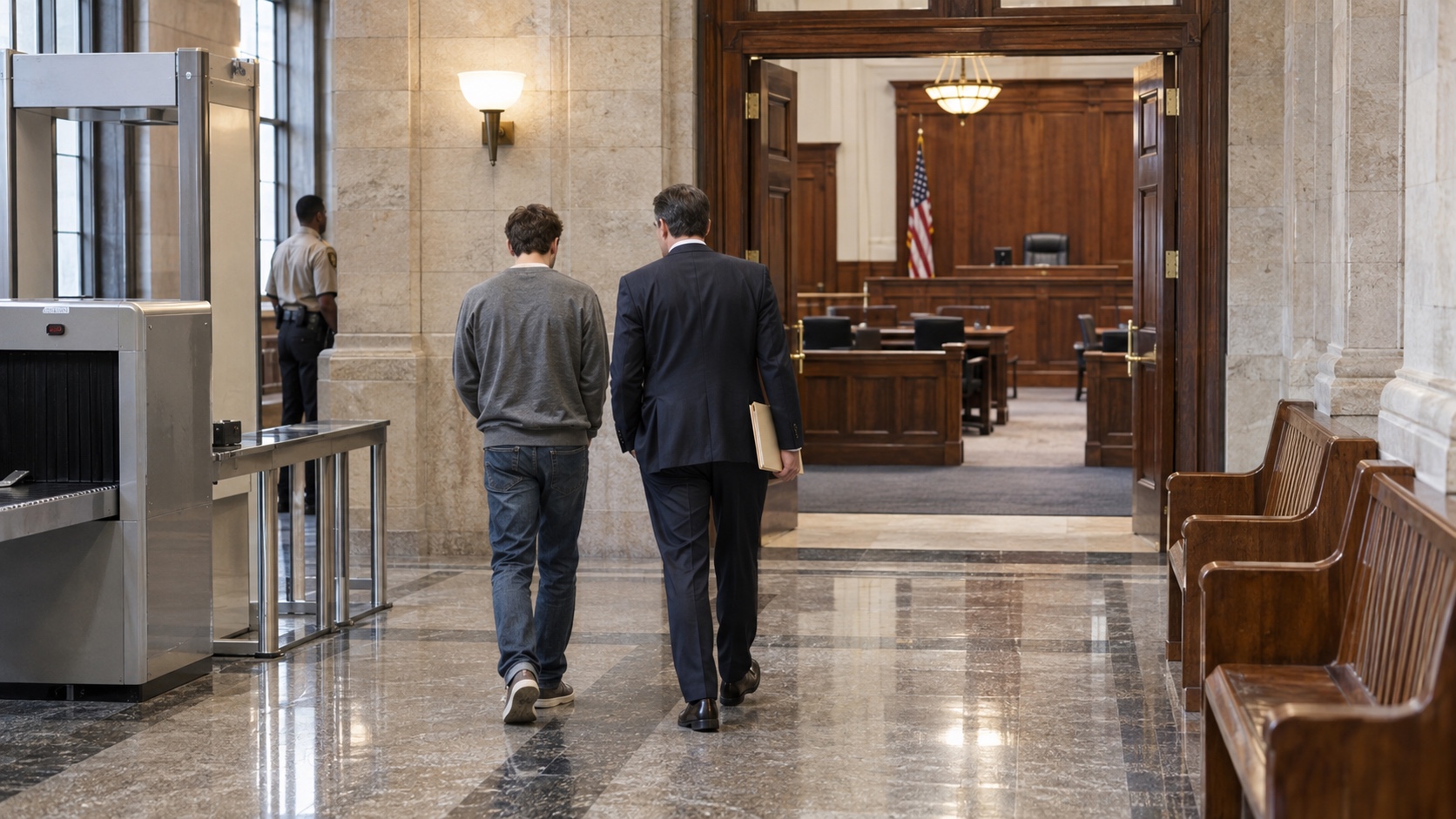
A person arrested without prior judicial process must receive prompt review. At the first appearance, the judge identifies the charges or allegations, explains key rights, considers counsel, and addresses release or detention. Federal Rule 5 requires an arrested federal defendant to be brought before a magistrate judge without unnecessary delay; state deadlines and terminology differ.
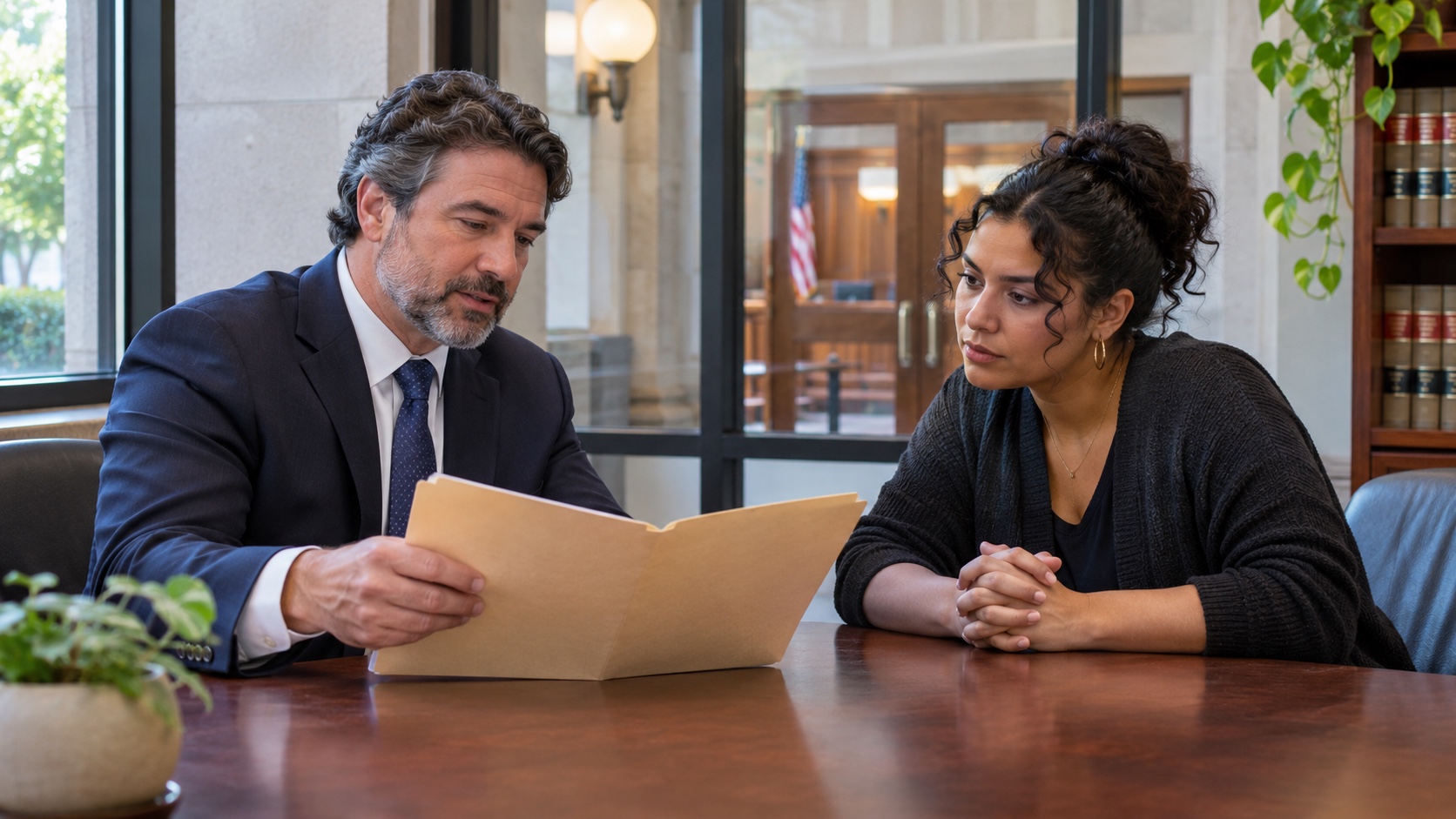
If the accused cannot afford counsel and the charge carries a right to appointed representation, the court begins the eligibility and appointment process. A public defender or appointed private attorney may appear. Early representation matters because release facts, preservation of evidence, and charging decisions can develop quickly. The judge does not decide guilt at this hearing. The questions are preliminary: is there lawful authority to hold the person, what comes next, and what conditions are necessary while the case is pending?
Release and Detention Focus on Future Risk
Courts consider whether the defendant is likely to return and, where law permits, whether release would create a danger. Possible outcomes include release on a promise to appear, nonfinancial conditions, secured or unsecured bond, supervision, or detention. Statutes identify permissible factors and presumptions.
Conditions may restrict travel, contact with named people, firearm possession, substance use, or other conduct related to identified risks. A condition should be tailored rather than used as advance punishment. Failure to appear or violation of release terms can produce revocation and new consequences.
American jurisdictions are reconsidering money bail because detention based on inability to pay can distort case outcomes. Reforms differ widely. A reader should consult the current law and court order rather than assume that “bail” always means paying cash.
Arraignment Provides Formal Notice and a Plea
At arraignment, the court ensures the defendant has the charging document, states or waives a formal reading of the charges, and asks for a plea. A not-guilty plea preserves the issues and moves the matter toward pretrial litigation or trial. A guilty plea triggers a separate process to confirm that the choice is informed and voluntary.
“No contest” pleas are available in some jurisdictions and under particular rules. Other specialized pleas may exist under state law. Defense counsel explains the legal effect, because everyday meanings do not always match courtroom consequences. Scheduling often begins at arraignment. Courts set dates for discovery, motions, conferences, and trial, while accounting for speedy-trial rules. Continuances may be granted for preparation, new evidence, attorney changes, or other legally sufficient reasons.
Discovery Allows Each Side to Prepare
The prosecution discloses evidence under rules, statutes, and constitutional duties. Materials may include reports, recordings, test results, photographs, digital data, witness statements, and the defendant’s statements. Prosecutors must disclose material exculpatory and impeachment evidence under constitutional doctrine.
Defense discovery duties are narrower but can include notice of certain defenses, expert materials, or evidence the defense plans to introduce. Protective orders may limit dissemination of sensitive records without preventing counsel from using them in the case.
Lawyers do more than exchange files. They examine whether evidence is complete, authenticate records, retain experts, visit locations, interview witnesses, and develop a theory. Discovery can expose weaknesses that lead to dismissal, amended charges, or a negotiated resolution.
Plea Negotiations Resolve Many Cases
A prosecutor may offer to dismiss counts, recommend a sentence, or accept a plea to a different offense. The defense weighs the evidence, legal defenses, collateral consequences, sentencing exposure, and the client’s goals. The decision to plead belongs to the defendant after advice from counsel.
A judge reviews a guilty plea in open court. The judge typically confirms that the defendant understands the charge, rights being waived, potential penalties, and terms of the agreement. The court also establishes a factual basis where required. A judge may reject certain agreements or decline to follow a nonbinding recommendation. Plea bargaining conserves resources, but it also raises concerns about pressure, unequal leverage, and accuracy. Effective representation and meaningful disclosure are essential because a guilty plea ordinarily waives a trial and many related claims.
Pretrial Motions Define What the Jury Will Hear
The defense may ask to suppress evidence obtained through an unconstitutional search or interrogation. Either side may seek rulings on expert testimony, prior acts, hearsay, severance, or the wording of charges. A motion to dismiss tests legal defects rather than asking the judge to choose between competing witness accounts reserved for trial.
Some motions require evidentiary hearings. Officers, witnesses, or experts testify, exhibits are introduced, and the judge makes findings. A successful suppression motion excludes specified evidence; it does not automatically dismiss the case if other proof remains.
Pretrial conferences narrow disputes and address logistics. Courts may rule on exhibit lists, courtroom security, interpreters, accommodations, and jury questionnaires. Careful preparation makes the eventual trial more focused.
Jury Selection Seeks an Impartial Decision Maker
Potential jurors are summoned from the community and questioned in a process called voir dire. The judge and lawyers examine whether a juror can decide the case fairly based only on admitted evidence and instructions. A juror with disqualifying bias can be removed for cause.
Each side may also receive a limited number of peremptory challenges, but those challenges cannot be used for unconstitutional discrimination. The final jury is sworn, and alternates may be selected. A defendant may choose a bench trial in cases where law permits and required consent is obtained.
Trial Tests the Charge Under the Highest Standard
The prosecution gives an opening statement, presents witnesses and exhibits, and bears the burden throughout. Defense counsel cross-examines and may present evidence, but the defendant has no obligation to testify or prove innocence. After the prosecution rests, the defense can argue that the evidence is legally insufficient.
If the defense presents a case, the prosecution may offer rebuttal. Both sides then deliver closing arguments. The judge instructs jurors on offense elements, defenses, credibility, and the presumption of innocence. Jurors deliberate privately and apply the beyond-a-reasonable-doubt standard.
A not-guilty verdict ends the prosecution on that charge and ordinarily prevents retrial. A guilty verdict leads to post-trial motions and sentencing procedures. A hung jury can result in a mistrial and possible retrial. Appeals usually address claimed legal error rather than conducting a new trial with new witnesses.
Victims have an important but distinct place in the case. Statutes may provide notice, attendance, consultation, protection, restitution, and an opportunity to be heard at specified stages. Prosecutors consider victims’ information but exercise public charging authority; a private person does not personally file or dismiss the government’s criminal case in the ordinary sense. Courts must respect those statutory interests while preserving the accused’s constitutional rights and the prosecution’s burden. That balance is one reason criminal procedure assigns decisions to different actors instead of allowing any single participant to control the entire path. It also explains why a prosecutor can continue despite a witness’s changed preference, or dismiss despite public pressure, when evidence and legal duties point that way. Judicial oversight supplies another check. Written rulings preserve accountability for review.
Procedure Protects Accuracy and Legitimacy
From arrest to verdict, different actors hold different powers. Police investigate, prosecutors charge, defense counsel protects the accused’s interests, judges rule on law, and juries find facts when a jury trial occurs. Victims and witnesses also have statutory rights and essential roles.
No short guide can predict a particular case. Jurisdiction, age, charge level, immigration status, prior record, and local rules can change the path. The durable principle is that accusation must be tested through an ordered process before punishment follows.