The Bill Of Rights As A Shield For Individual Liberty
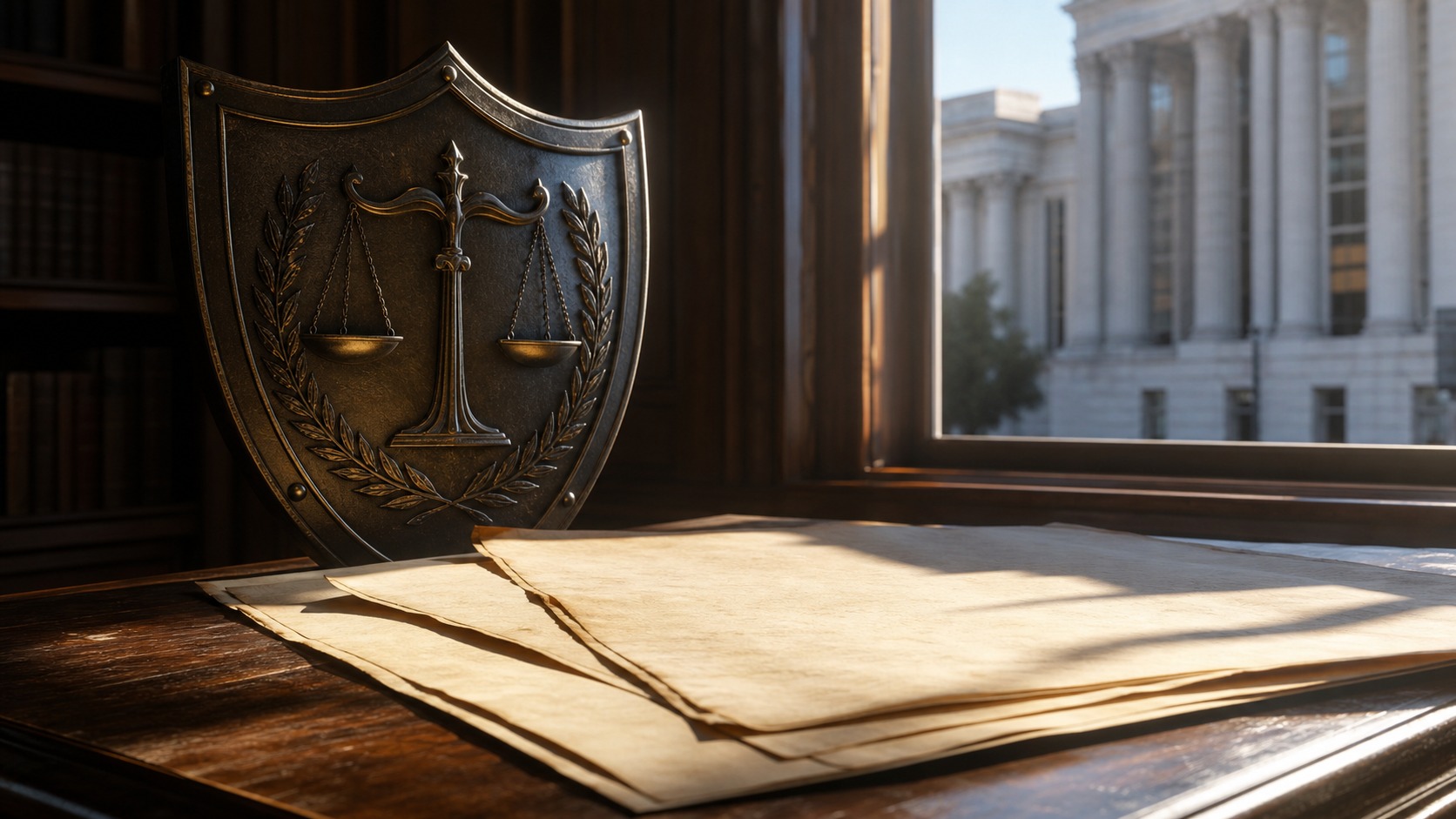
The Bill of Rights protects individual liberty by naming areas where government power must stop, slow down, or justify itself. It does not give citizens every freedom they possess, because the American tradition assumes rights are deeper than any list. Yet the first ten amendments make crucial protections visible: speech, religion, arms, privacy, due process, jury trial, limits on punishment, retained rights, and reserved powers. They function as a shield for the person against overreach.
A: Many citizens wanted explicit protections against the new federal government's power.
A: No. It names key protections while assuming rights are deeper than the list.
A: It protects conscience, criticism, worship, assembly, press, and petition.
A: They restrain government access to homes, papers, devices, and data.
A: They make accusation answerable through fair, public, and adversarial process.
A: It warns against denying rights simply because they are not listed.
A: It resists unlimited national power and preserves state and popular authority.
A: It lets citizens invoke written limits when government power presses too far.
A Bill Of Rights Was Demanded From Suspicion
Many Americans supported the Constitution only after demanding stronger guarantees for liberty. Anti-Federalists feared that a new national government might become too powerful. Federalists argued that limited powers already restrained it, but promises of amendments helped secure ratification. The Bill of Rights therefore emerged from a healthy suspicion of power.
That suspicion was not cynicism. It was a realistic view of human nature. People who had resisted imperial abuses did not want to create a government that could repeat them under American names.
The First Amendment Protects The Inner And Public Person
The First Amendment guards religion, speech, press, assembly, and petition. These freedoms protect the person as thinker, believer, critic, neighbor, writer, worshiper, and citizen. They prevent government from owning conscience or controlling the channels through which citizens challenge power.
Speech and religion are especially important because they reach inward and outward at the same time. A person believes, speaks, gathers, publishes, and appeals. These acts keep liberty alive in public rather than hidden in private feeling.
Without these protections, other rights become harder to defend. Citizens who cannot criticize officials, gather with allies, publish objections, or appeal for redress will struggle to preserve any liberty for long.
The Second Amendment Reflects Distrust Of Monopoly Power
The Second Amendment is debated intensely, but historically it reflects concern about defense, citizenship, militia tradition, and distrust of concentrated force. A free people worried about standing armies and disarmed populations. Whatever policy debates arise today, the amendment belongs to a constitutional world that feared monopoly power.
Privacy Begins At The Door
The Third and Fourth Amendments protect the home and person from intrusive government power. Quartering soldiers and unreasonable searches may seem like old concerns, but the principle remains current. Government should not enter homes, seize papers, track lives, or search persons without lawful justification.
Modern technology makes this principle more important, not less. Digital records, location trails, financial data, messages, and devices can reveal more than earlier officials could have imagined. The shield of liberty must adapt without surrendering the old demand for warrants, reasonableness, and accountability.
Due Process Guards Against Easy Punishment
The Fifth Amendment protects against self-incrimination, double jeopardy, deprivation without due process, and taking property without just compensation. These protections tell government that punishment and seizure require disciplined procedures. The person accused or burdened remains a rights-bearing human being.
Trial Rights Make Accusation Answerable
The Sixth and Seventh Amendments protect jury trial, counsel, confrontation, speedy and public trial, and civil jury traditions. These rights make accusations answerable before law and community judgment. They protect citizens from being swallowed by closed processes controlled entirely by officials.
A jury is not perfect, but it represents distrust of government acting alone. It places ordinary citizens between the accused and the state. That role can be demanding, but it is one of the ways liberty becomes a shared civic duty.
Counsel and confrontation matter because legal systems can overwhelm individuals. A person facing the state needs help, evidence, and the ability to test claims. The Bill of Rights recognizes that process is part of freedom.
Punishment Has Constitutional Limits
The Eighth Amendment restrains excessive bail, excessive fines, and cruel or unusual punishment. It tells government that even punishment has limits. A person convicted of wrongdoing does not become an object outside moral concern. Justice may be firm without becoming vindictive or lawless.
This protection also matters for people who have not been convicted. Excessive bail or fines can punish before guilt is established. Liberty requires proportionality because government power can destroy lives through financial pressure as well as prison.
The Ninth Amendment Warns Against A Narrow List
The Ninth Amendment says that listing certain rights should not be used to deny others retained by the people. This is a crucial reminder. Written rights are essential, but human liberty is not exhausted by a government list. The person remains prior to the document that protects him.
The Tenth Amendment Reserves Power
The Tenth Amendment reinforces the principle that powers not delegated to the United States are reserved to the states or the people. This protection is structural, but it serves individual liberty by resisting the assumption that national power is unlimited. Reserved powers keep political authority divided and closer to citizens.
The phrase or to the people matters. It reminds readers that not every unexercised federal power belongs automatically to another government. Some space remains with citizens themselves.
Incorporation Changed The Bill’s Reach
For much of American history, the Bill of Rights primarily limited the federal government. Through the Fourteenth Amendment and later court decisions, many protections came to apply against state governments as well. This changed the practical reach of individual liberty by giving citizens federal constitutional claims against local abuses.
That development remains debated in details, but its practical effect is enormous. Speech, religion, search protections, due process, and other rights now operate as shields against more than one level of government.
The story shows that constitutional liberty has both text and development. Rights become effective through interpretation, litigation, public understanding, and institutional willingness to enforce them.
Rights Need Citizens Who Use Them
The Bill of Rights is a shield, but shields must be lifted. Citizens need to speak, worship, publish, assemble, demand warrants, serve on juries, challenge unlawful fines, and defend rights for unpopular people. A right unused becomes easier to narrow through neglect.
A Shield Against Every Temporary Majority
The deepest purpose of the Bill of Rights is to prevent basic liberties from depending on the mood of the moment. Majorities change. Emergencies pass. Officials rotate. Rights need protection across those changes.
That protection is not anti-democratic. It makes democracy livable by lowering the stakes of defeat and preserving space for dissent, conscience, and correction. The Bill of Rights lets citizens remain free persons even when their side loses power.
Written Rights Educate Citizens
Written rights do more than guide courts. They educate citizens in the language of liberty. A person who can name speech, conscience, search, trial, due process, and reserved powers can notice threats more clearly. Public vocabulary is part of public defense.
The Amendments Protect Unpopular People
The Bill of Rights matters most when the person invoking it is unpopular. Popular speakers often have political protection already. Popular religions may not need courts to be tolerated. Popular defendants may receive sympathy. Written rights exist because fear and anger often fall on people outside the majority’s favor.
This does not mean every rights claim is correct. It means constitutional protections should not be measured by the social attractiveness of the claimant. The shield is meaningful because it can be raised by people whom officials or majorities would rather ignore.
A culture that defends rights only for friends has already weakened the Bill of Rights. The test is whether citizens can defend a principle when it protects a person they would not choose as an ally.
Modern Technology Tests Old Protections
Digital life creates new questions for old protections. Phones, cloud storage, biometric data, smart devices, financial trails, and location records can reveal intimate details. The Fourth Amendment’s old concern with unreasonable searches must be applied to tools that make intrusion less visible but more comprehensive.
The same is true for speech. Online platforms, government pressure, and informal censorship can blur the line between private moderation and state-influenced suppression. Citizens need careful thinking rather than slogans.
Jury Service Is A Liberty Duty
Jury service is sometimes treated as an inconvenience, but it is one of the few moments when ordinary citizens directly stand between the state and another person. Taking that duty seriously honors the Bill of Rights as a civic practice rather than a museum piece. It also reminds the public that liberty is not defended only by judges and lawyers. The constitutional system expects ordinary people to bring conscience, attention, and independence into the courtroom.
Rights Can Be Eroded By Procedure
Rights are not always destroyed through open repeal. They can be weakened by costs, delays, confusing forms, narrow standing rules, qualified exceptions, and practical barriers to counsel. A right that is too expensive or confusing to use may survive in theory while failing in real life.
This is why remedies matter. Courts, legislatures, lawyers, civic groups, and ordinary citizens should care whether people can actually vindicate rights. The Bill of Rights is a shield only if citizens can lift it.
Administrative convenience should not become the quiet enemy of constitutional protection. Liberty often depends on making procedures usable for people without wealth or influence.
The Shield Requires Courage
The Bill of Rights requires courage because every generation faces reasons to narrow it. War, crime, disorder, panic, scandal, technology, and moral outrage can all make liberty seem inconvenient. Courage does not ignore those problems. It insists that government address them without treating rights as disposable.
A shield is useful because danger exists. The presence of danger is not an argument for throwing the shield away.
The Shield Is Strongest When Principles Are Shared
The Bill of Rights works best when citizens share enough constitutional principle to defend rights beyond immediate advantage. Courts can enforce text, but public culture decides whether rights are treated as common goods or partisan weapons. If speech matters only for one’s allies, religious liberty only for one’s own faith, search limits only for sympathetic suspects, and due process only for favored defendants, the shield weakens. A stronger culture understands that the amendments protect a free people as a whole. They preserve room for disagreement, correction, worship, privacy, and lawful defense even when public emotion demands shortcuts.
The Amendments Keep Space Open
The Bill of Rights keeps space open for the activities that make a free people possible. Citizens can worship, speak, publish, gather, object, defend themselves in court, protect their homes, and appeal to written limits when officials overreach.
That open space is easy to undervalue until it narrows. People often notice liberty most clearly when they suddenly need it. The wiser habit is to defend the shield before crisis arrives, while principles can still be argued calmly and applied consistently. That defense should happen in schools, local meetings, courtrooms, churches, newsrooms, homes, and ordinary conversations. The amendments remain strongest when citizens treat them as shared protections before controversy makes them costly. That shared defense matters most when fear, outrage, or political advantage tempts people to narrow someone else’s protection. A free people should recognize that today’s unpopular claimant may reveal tomorrow’s endangered principle. The shield is therefore both legal and cultural, written in amendments and renewed through public loyalty to liberty.