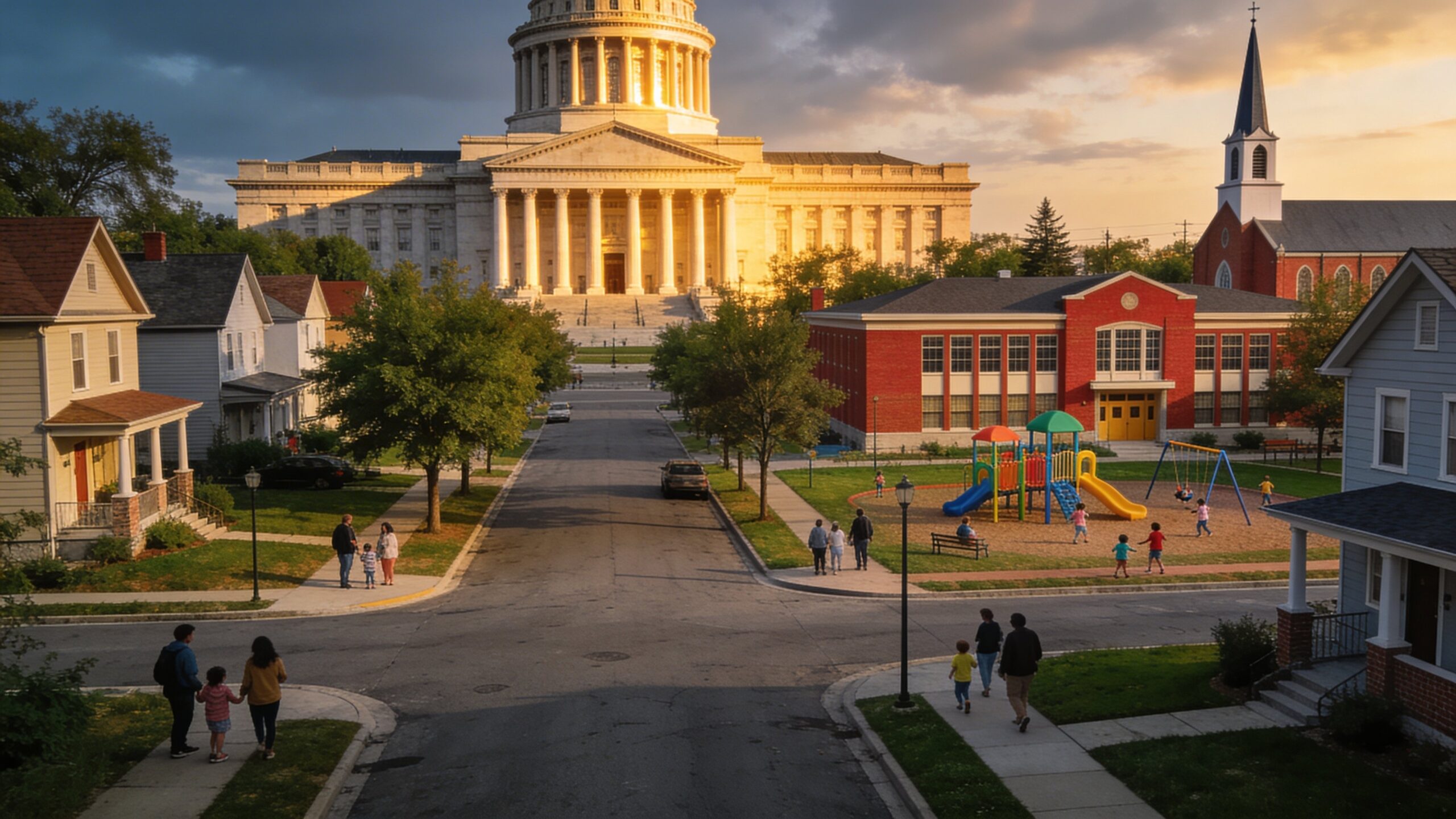
The Argument Starts Before the Ballot Box
For many conservatives, politics is important, but it is not the deepest force shaping a nation. The more powerful influence, they believe, is culture. Culture includes the values people inherit, the habits they practice, the standards they accept, the stories they tell, and the institutions they trust. It is the atmosphere people live in long before they vote, run for office, or follow a political debate. Conservatives often argue that politics reflects culture more than it creates it. In their view, elections may change leaders, and legislation may redirect policy, but the deeper character of a society is formed elsewhere. It is formed in homes, neighborhoods, schools, churches, workplaces, and communities. That is why many conservatives believe culture comes before politics. They see culture as the source of the ideas and instincts that eventually shape political life.
A: It means values, habits, and institutions shape political life before laws and elections do.
A: Because they often see family as the first place people learn responsibility, discipline, and belonging.
A: No. Most believe politics matters greatly, but it cannot replace deeper cultural formation.
A: Because they shape imagination, values, and the beliefs of future citizens.
A: Many conservatives see religion as a major source of morality, duty, and social cohesion.
A: It includes families, churches, clubs, charities, schools, and community groups outside the state.
A: They are often seen as inherited wisdom tested over time rather than meaningless old customs.
A: They often believe human nature is flawed and cannot be permanently fixed by government programs alone.
A: It means shaping character, conscience, and habits so people can use freedom responsibly.
A: That politics reflects the people culture produces, so cultural health must come first.
Culture Shapes What a Society Thinks Is Normal
One of the central conservative beliefs is that culture determines what people see as normal, admirable, shameful, or worth defending. Before laws are written, people already carry assumptions about right and wrong. They already have instincts about family, authority, faith, responsibility, freedom, and duty. These assumptions are not usually created by government. They are formed through daily life and repeated experience. Conservatives often believe that when a society’s culture changes, its politics eventually changes with it. That is because political systems do not float above human life. They emerge from the beliefs, desires, fears, and loyalties of ordinary people. This is why conservatives often focus so intensely on cultural questions. They do not see them as distractions from politics. They see them as the roots of politics. A nation that celebrates discipline, responsibility, and stable family life will likely have a different political future than one that celebrates constant self-expression, distrust of tradition, and rejection of inherited norms. From the conservative point of view, politics is not the engine pulling society forward. It is more like a mirror reflecting what society has already become.
The Family Comes First in the Conservative Mind
When conservatives say culture comes before politics, they often begin with the family. The family is seen as the first school of citizenship, responsibility, and moral formation. It is where children first learn limits, respect, obligation, patience, and the meaning of belonging to something larger than themselves. Long before anyone studies the Constitution or develops a view on public policy, they have already absorbed lessons from family life. Those lessons influence how they later see freedom, authority, responsibility, and community.
Conservatives tend to believe that strong families create stable societies. If families weaken, politics becomes more strained because government is pressured to solve problems that begin in broken relationships and damaged social structures. In this way, family life is not merely private. It has public consequences. A culture that strengthens families, in the conservative view, is doing more for the long-term health of society than any short-term political slogan ever could. For that reason, conservatives often see family decline as a cultural crisis before they see it as a political one.
Character Matters More Than Policy Alone
Another reason conservatives place culture before politics is their belief that laws cannot manufacture character. Government can punish crime, set standards, and protect rights, but it cannot easily create honesty, courage, loyalty, self-control, or wisdom. Those qualities are developed through upbringing, example, discipline, and moral instruction. Conservatives often argue that a free society depends on citizens who can govern themselves. If people lose the ability to control their impulses, honor commitments, and accept responsibility, then political freedom becomes harder to sustain.
This is why conservative thought often emphasizes virtue. That word may sound old-fashioned, but it remains central to the worldview. Virtue means the habits that make freedom workable. A society cannot rely only on police, courts, and regulations. It must also rely on conscience. Conservatives frequently argue that culture forms conscience. It teaches people what is expected of them even when no one is watching. Politics can reinforce some of those expectations, but it usually cannot create them from scratch.
Tradition Is Valued Because It Carries Wisdom Forward
Conservatives also believe culture matters because it preserves memory. Traditions are often seen not as outdated customs but as ways societies carry wisdom across time. A tradition may survive because earlier generations discovered that certain patterns of life promote order, stability, and human flourishing. Conservatives are often cautious about discarding such patterns too quickly. They worry that when a culture forgets why certain norms existed, it may destroy valuable social protections in the name of progress.
This does not mean conservatives oppose all change. Rather, they often prefer change that respects continuity. They tend to distrust movements that promise total reinvention. In their view, politics becomes dangerous when it acts as if society can be rebuilt overnight according to abstract theories. Culture, by contrast, develops more gradually. It tests values over time. It passes down lessons through institutions and customs. Conservatives often feel that this slower process is more humane and realistic than the sweeping ambitions of ideological politics.
Religion Plays a Major Role in the Cultural Argument
For many conservatives, religion is one of the strongest reasons culture must come before politics. Religious belief gives people a moral framework that government cannot replace. It teaches ideas about duty, sacrifice, humility, forgiveness, and accountability. Even conservatives who differ in theology often agree that faith traditions have historically helped sustain social order and moral seriousness. Religion, in this view, does not merely provide private comfort. It helps shape public character.
This helps explain why conservatives often worry when religious influence declines. Their concern is not only about church attendance. It is about what happens when a society loses a shared moral vocabulary. Without deeper beliefs about meaning and obligation, politics can become a contest of raw power, appetite, and identity. Conservatives often fear that if people no longer believe they answer to anything higher than personal preference or political fashion, then public life becomes more unstable, more selfish, and more fragmented. Culture rooted in faith is therefore seen as one of the foundations that politics depends upon, not a side issue that politics can safely ignore.
Schools, Media, and Entertainment Matter Because They Shape Imagination
Many conservatives place enormous importance on schools, media, entertainment, and popular culture because they believe these forces shape the imagination of a nation. People do not simply learn through laws and speeches. They also learn through stories, images, music, jokes, classroom lessons, and repeated symbols. These things help define what a society admires and what it laughs at. Over time, they influence not just taste but moral instinct. That is why conservatives often react strongly to cultural trends in education and media. They believe these arenas help form the next generation’s worldview. If schools teach children to distrust inherited traditions, or if entertainment consistently mocks faith, family, patriotism, or restraint, conservatives often see long-term political consequences. The concern is not just about one television show, one textbook, or one trend. It is about the steady shaping of public consciousness. In this sense, cultural influence appears more powerful than political advertising because it reaches people more deeply and more continuously.
Civil Society Is Seen as the Real Strength of a Nation
Conservatives often place culture before politics because they trust civil society more than centralized power. Civil society includes families, churches, charities, clubs, schools, neighborhoods, and local associations. These institutions stand between the individual and the state. They provide belonging, accountability, and purpose. They also teach people how to cooperate, sacrifice, and participate in a shared life. Conservatives frequently see these institutions as healthier and more human than large bureaucratic systems.
When civil society is strong, conservatives believe society becomes more resilient. People solve problems locally, form relationships naturally, and learn to care for others without waiting for distant authorities to intervene. When civil society weakens, politics tends to expand because government is asked to manage more and more aspects of life. Conservatives often view that expansion with suspicion. They worry that an overgrown political system can crowd out the very institutions that once formed responsible citizens. That is another reason they argue culture comes first. The fabric of society must be strong before political freedom can truly thrive.
Conservatives Often Distrust the Idea That Politics Can Save Everything
A major feature of conservative thinking is skepticism toward grand political promises. Conservatives often believe human beings are flawed, societies are complicated, and attempts to perfect the world through politics usually end in disappointment or coercion. This skepticism shapes their view of culture. If politics cannot save humanity, then the real work of sustaining civilization must happen elsewhere. It must happen in the formation of conscience, the inheritance of values, and the building of stable institutions. This is one reason many conservatives speak less like technocrats and more like cultural critics. They are often less interested in clever policy design alone than in the moral and social conditions that make any policy workable. They may support legislation, but they are rarely content to treat law as the whole answer. They tend to ask a deeper question: what kind of people will this society produce? That question leads them away from politics as the first cause and toward culture as the more powerful force.
Local Life Feels More Real Than National Power
Conservatives also tend to respect local life because it is where culture is most visible and most concrete. In local communities, values are not abstractions. They appear in how neighbors treat one another, how schools teach children, how congregations serve families, and how local traditions hold people together. National politics, by contrast, can feel distant, theatrical, and unstable. It changes quickly and often rewards performance over wisdom.
This helps explain why conservatives frequently emphasize local control, community standards, and decentralized authority. Their preference is not only political. It is cultural. They believe people are formed by close relationships and shared environments more than by national messaging. A healthy town, strong neighborhood, or stable local institution can shape human character more effectively than a speech from a distant capital. In that sense, local culture is seen as more real and more formative than national politics.
Decline Is Often Understood as a Cultural Problem First
Conservatives frequently speak in the language of decline, and that tendency is tied directly to the belief that culture comes before politics. When they describe social breakdown, they usually mean more than partisan disappointment. They are talking about weakened families, fading religious life, declining trust, confusion about identity, loss of shared standards, and the erosion of civic virtue. These are cultural concerns before they are legislative ones.
From the conservative perspective, a nation rarely weakens only because of a bad law or a failed administration. It weakens because the moral and cultural foundations beneath public life begin to crack. Politics then becomes more frantic because it is trying to solve problems that were created far from the halls of power. This is why conservatives often invest so much attention in what some people dismiss as symbolic struggles. They do not see symbols as trivial. They see them as signs of deeper cultural changes that will shape the future.
Politics Still Matters, but It Comes Second
None of this means conservatives think politics is unimportant. Politics matters greatly. Laws protect liberty, define institutions, punish wrongdoing, and create the framework within which society functions. Conservatives care deeply about government because government can either defend healthy cultural norms or undermine them. But many conservatives still insist that politics comes second. It can protect what culture has built, but it cannot fully replace culture’s work.
This distinction is crucial. Conservatives are not saying elections do not matter. They are saying elections are not enough. Winning office does not automatically restore family life, renew faith, strengthen communities, or build character. Those things require slower, deeper work. They require example, teaching, habit, and commitment over time. In the conservative imagination, political success without cultural renewal is fragile. It may look powerful for a moment, but it often fades if the underlying culture is moving in another direction.
The Core Conservative Insight
At the center of this argument is a simple idea: politics inherits the people that culture produces. A constitution may be wise, but it still depends on citizens with discipline and moral seriousness. A law may be just, but it still depends on a society willing to honor it. A free nation may celebrate liberty, but it still depends on people who know how to use liberty well. Conservatives believe these qualities are learned before politics ever becomes visible. That is why they often say culture comes before politics. They believe civilization is built from the inside out. It begins with moral formation, shared values, living traditions, and stable institutions. Politics can guide, protect, and sometimes correct, but it cannot do the deepest work alone. For conservatives, the future of a nation is decided not only in capitol buildings and election seasons, but in the far quieter places where people learn what is worth loving, defending, and passing on. That is where culture lives, and that is why they believe it comes first.