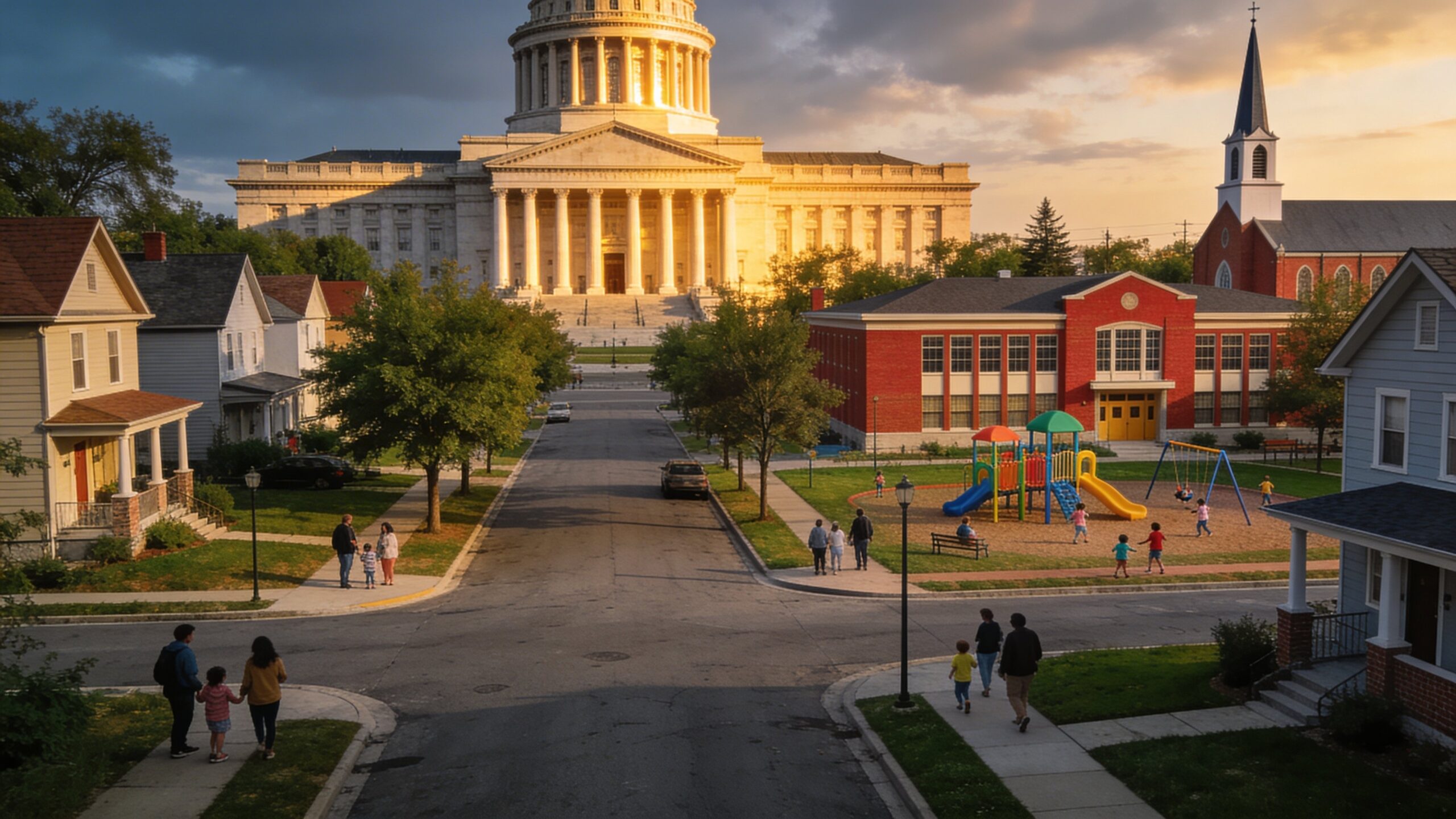
The Role of Family in Conservative Philosophy
Discover why conservative philosophy sees family as the first school of duty, tradition, love, and social order—and why that matters for civilization.

Understanding the Right Side of Society
Discover why conservative philosophy sees family as the first school of duty, tradition, love, and social order—and why that matters for civilization.
Conservatives often see culture as the foundation of politics, shaping character, family life, faith, and the values a nation carries into public life.
Are there truths that never change? Discover why conservatives argue that moral absolutes are essential to justice, human dignity, and lasting freedom. Explore how enduring ethical principles shape law, culture, and the foundations of a stable society in a rapidly shifting world.
What if true freedom depends on restraint? Discover how conservatism connects common sense with limits on power, behavior, and rapid change—arguing that boundaries don’t restrict liberty, they protect it. Explore why structure, stability, and constitutional guardrails are seen as the foundation of lasting prosperity and a free society.
What if true freedom depends on restraint? Discover how conservatism connects common sense with limits on power, behavior, and rapid change—arguing that boundaries don’t restrict liberty, they protect it. Explore why structure, stability, and constitutional guardrails are seen as the foundation of lasting prosperity and a free society.
What do conservatives really believe about human nature? At the core is a powerful mix of realism and hope: people are capable of great good, yet prone to error. Discover how this understanding shapes views on limited government, personal responsibility, tradition, and the careful design of a free society.
Why do conservatives favor stability over sweeping reform? Because they see order, tradition, and steady institutions as the backbone of lasting freedom. Explore how history, human nature, and constitutional design shape a philosophy that prizes careful progress over radical upheaval.
What do conservatives mean by “ordered liberty”? It’s the powerful idea that freedom flourishes best within a framework of law, virtue, and constitutional limits. Discover how this principle shapes debates on rights, responsibility, government power, and the future of a stable, free society.
Conservatism and liberalism are more than political labels—they’re rival philosophies about human nature, freedom, tradition, and change. This deep dive reveals how these competing ideas shape laws, culture, and society itself, and why their tension continues to define modern civilization.
Conservatism and liberalism are more than political labels—they’re rival philosophies about human nature, freedom, tradition, and change. This deep dive reveals how these competing ideas shape laws, culture, and society itself, and why their tension continues to define modern civilization.
In a world racing toward constant change, conservatism offers a powerful reminder: progress without memory is fragile. Discover why tradition matters, how inherited wisdom shapes freedom and order, and why lasting societies reform carefully instead of tearing down what time has proven works.
What does conservatism really stand for beyond the headlines? This clear, engaging guide breaks down its core principles—from tradition and responsibility to limited government and careful reform—showing how conservatism seeks stability without stagnation and freedom grounded in order.